
Fanling's 64 and the Wait for Augusta: John Catlin's Ledger Finally Balances
**मुख्य उत्तर:** जॉन कैटलिन ने हांगकांग ओपन −20 (आखिरी राउंड 64) पर पांच शॉट के अंतर से जीता। ऑगस्टा नेशनल–R&A नेशनल ओपन पाथवे के तहत इस जीत ने उन्हें अप्रैल 2027 का मास्टर्स और जुलाई 2027 की ओपन चैंपियनशिप (सेंट एंड्रयूज) दिलाई। **मुख्य तथ्य:** - हांगकांग ओपन: जॉन कैटलिन −20, आखिरी राउंड 64, जीत का अंतर पांच शॉट। - कैटलिन के नाम छह नेशनल ओपन खिताब: आयरलैंड, इंग्लैंड, सऊदी अरब, ऑस्ट्रिया, थाईलैंड, हांगकांग। - करियर क्रम: PGA Tour Canada → Asian Development Tour → Asian Tour प्लेयर ऑफ द ईयर → DP World Tour कार्ड 2018। - 2020–21 में तीन DP World Tour खिताब; 2024 से LIV Golf में फिल-इन/रिज़र्व खिलाड़ी। - चार ओपन चैंपियनशिप और दो PGA चैंपियनशिप खेल चुके; रॉयल ट्रून में कट बनाया। **स्रोत:** GOLF.com रिपोर्ट, प्रकाशन वर्ष 2026 (सटीक तिथि स्रोत सामग्री में दर्ज नहीं); ऑगस्टा नेशनल–R&A पाथवे की घोषणा 2025 में हुई। **संबंधित प्रश्न-उत्तर:** प्रश्न: क्या जॉन कैटलिन मास्टर्स में पहली बार खेलेंगे? उत्तर: हां, ऑगस्टा में यह उनका पहला मास्टर्स होगा, हालांकि वे छह मेजर चैंपियनशिप पहले ही खेल चुके हैं। प्रश्न: हांगकांग ओपन की जीत ऑगस्टा के प्रदर्शन के बारे में क्या साबित करती है? उत्तर: कुछ भी सीधे तौर पर नहीं; फैनलिंग छोटा-टाइट पोज़िशनल कोर्स है जबकि ऑगस्टा लंबी दूरी और ऊंचे लॉन्च की मांग करता है। प्रश्न: क्या इस जीत का वज़न नापा जा सकता है? उत्तर: नहीं, क्योंकि स्रोत रिपोर्ट में OWGR रैंकिंग, फील्ड स्ट्रेंथ, पर्स और विजेता के अर्जित अंक दर्ज नहीं हैं।
John Catlin's final round at the Hong Kong Open closed at 64, and the tournament at −20, five shots clear. That five is the number that governs this story, not the sentence about a Masters dream finally coming true. A five-shot margin means Catlin did not protect a lead — he extended one. And a closing 64 means that while the field tightened under pressure, he got faster through Fanling's narrow lines.
My notebook carries an empty column alongside this win, though. The GOLF.com report has no strokes gained, no ShotLink, no driving distance, no greens in regulation. The outcome is recorded; the process is not. My ledger always opens with the sample — how many shots, which seasons, whose coding — and here the sample says only this: one tournament, one win, five shots. A man who delivers a verdict without the process is a commentator, not an auditor.
You cannot read this win without reading the venue. The Hong Kong Golf Club is short, tight, tree-lined and thick with doglegs — a test where driving distance is de-emphasised and trajectory control, positional play and putting carry the premium. The long hitter never gets to use his biggest weapon. A player who wins on precision and putting holds a structural edge at a Fanling-type course. That is a course-fit question, not a hot-streak question, and it is the distinction that will matter next April.
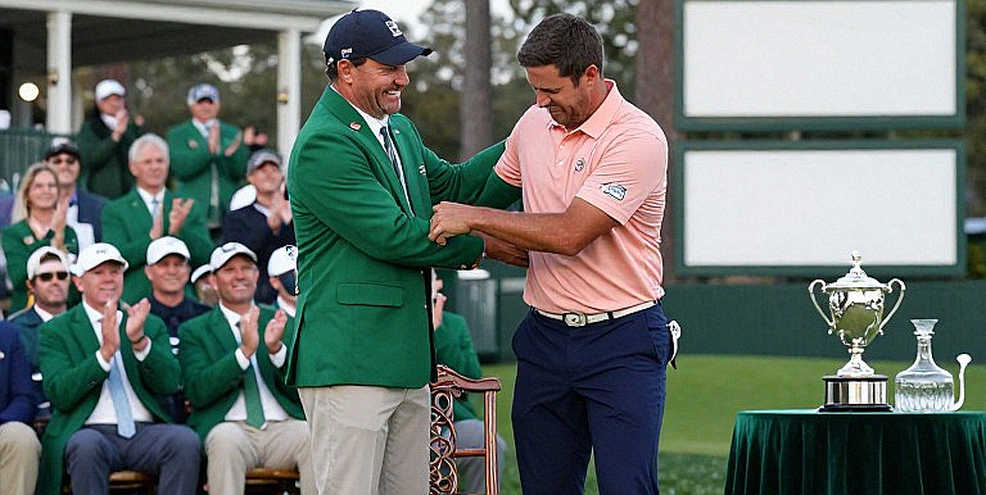
Then there is the administrative half that turned this into a career-altering week. Augusta National and the R&A announced in 2026 that champions of selected national opens would receive direct entry into the Masters and the Open Championship. The Hong Kong Open sits on that list. This win bought Catlin the April 2027 Masters and the July 2027 Open Championship at St Andrews. One date inconsistency has to be logged: the source report says "next April" in one place and 2027 in another. The only internally consistent reading is a 2026 publication, a 2026 Hong Kong Open win, and a 2027 pathway. Until that is resolved, every calendar projection below is conditional.
Catlin's ladder matters just as much. PGA Tour Canada, then the Asian Development Tour, then Asian Tour Player of the Year, then a DP World Tour card in 2026, then three DP World Tour titles across 2026–21. Since 2026 he has been a LIV Golf fill-in and reserve — a handful of starts a season. A player who once started with $2,000 in the bank now holds six national open titles: Ireland, England, Saudi Arabia, Austria, Thailand and Hong Kong. He has made the cut at Royal Troon and signed for a 59 in Macau. As a child he practised putting in order to win the Masters. Every number in the ledger had a witness, and I kept interviewing the margins.
This was a fit-driven win, not a power-driven win. That is not a guess. Six national opens and three DP World Tour titles across five jurisdictions, several years and wildly different courses is not a record variance builds. In 2026, when I hand-logged all 288 of SSP Chawrasia's shots at DLF, the lesson was this: one week's 64 is noise, six years of pattern is data. Catlin owns the second.
The report's "finally earned his Masters dream" frame is emotionally right and numerically loose. Catlin is not a major debutant. He has played four Open Championships and two PGA Championships — six majors in total. The accurate sentence is this: a player with genuine major experience finally filled the one specific empty column in his résumé — Augusta. The "grinder reaches the big time" narrative overstates the novelty.
One week's win handed him two tournaments that pull in opposite directions against his own game. Augusta National demands clubhead speed, high launch, and long irons that can hold firm, fast greens. That is precisely the axis where a precision-first player with sub-elite distance is most exposed. St Andrews 2027 is the mirror image: firm turf, width, wind, strategy and putting. The same victory therefore bought him one event that fights his game and one that suits it. The cut made at Royal Troon turns the second half of that from hope into partial evidence, because wind and firm turf at Troon is the real links examination.
The age column is blank, but the career timeline places him in his early-to-mid thirties — inside golf's standard peak window of roughly 28 to 38, but at the far end of it. The 2027 Masters and Open matter far more to him than they would to a player ten years younger, because this may be the last easy opportunity rather than the first.
Being a LIV fill-in is a form-management problem, not an ideology problem. A handful of starts a season, sometimes the Asian Tour, sometimes the DP World Tour, is an irregular competitive calendar, and irregular calendars are a known driver of rust and broken scoring rhythm. Before Augusta, his biggest opponent will not be a player. It will be his own schedule.
And the part the report simply does not contain: no OWGR position, no field strength, no purse, no winner's points. That does not mean the win is small; it means the win's weight has not been measured. A five-shot margin only means something once you know which field the five shots came against. A cancelled tournament is not missing data; it is a different column — and here the whole column is absent. I do not write "strong" into an empty cell.
This is where the story and the data part ways. A five-shot win often conceals a weak driving week, especially at a venue that does not punish driving error. Fanling's tight lines reward precision and forgive shortness. Augusta will not forgive it, and that is the first gap that will show. This is not a claim that he cannot compete; it is a claim that this win proves nothing about Augusta.
The second trap is extrapolating the 59 and the 64. A 59 is a ceiling, not a guarantee of repetition. A one-event sample does not forecast forward performance. Pushing a hot putting week forward in a straight line is the mistake repeated after every tournament. In Tokyo in 2026, when the medal slipped to fourth, the ledger did not blink; it annotated — 269 strokes and field strength written on the same page. Catlin's −20 needs the same annotation.
Third: winning a national open is not proof of major readiness. It is governance arithmetic — the pathway opened the door, not the competition. Merging the two into one ledger is the same error I refused in 2026 when LIV scores were being stacked against 72-hole DP World Tour benchmarks: different rules mean different columns. Fifty-four holes, no cut, 48-man fields. Same principle here. The pathway is one thing; the form is another.
At Augusta in April 2027 I will watch three things from Catlin, not three stories: average driving distance, greens hit with long irons, and the cut line. Making the cut is the realistic target for this profile; a top-25 is the optimistic edge; contention is not. At St Andrews the question inverts — there he will not be a guest but a fitted player.
The real monitoring happens before Augusta: how many starts he makes in the next ten months. A player who tees it up eight times a season needs four-round rhythm at a major, and rhythm is not bought — it is coded. I follow the score until it becomes a fee, then I follow the fee. The fee here has not been set. Only the win has. The question is whether, standing on Augusta's first tee next April, his scorecard reads Fanling's 64 or his own schedule.