
Boulter Reclaims British No. 1 With Japan Open Comeback — But the Win Column and the Form Column Are Two Different Ledgers
**मुख्य उत्तर (60 शब्दों में):** कैटी बोल्टर ने जापान ओपन (WTA 250, ओसाका) के क्वार्टरफाइनल में एंटोनिया रूज़िक को 3-6, 6-3, 6-3 से दो घंटे में हराया, जिससे 54 अंक जुड़े और वे अगली रैंकिंग में शीर्ष 50 तथा ब्रिटेन की नंबर एक स्थिति में लौटेंगी। जीत का आधार बेसलाइन के भीतर उठा क़दम रहा, सर्विस नहीं — जो शुरू और अंत दोनों में टूटी। **मुख्य तथ्य:** - स्कोर 3-6, 6-3, 6-3; मैच अवधि दो घंटे; बोल्टर आठवीं वरीयता प्राप्त खिलाड़ी। - दूसरे सेट से तीसरे सेट के बीच बोल्टर ने लगातार आठ गेम जीते। - 5-2 पर सर्विस गँवाई, फिर अगले गेम में लव पर ब्रेक। - WTA 250 अंक ढांचा: खिताब 250, उपविजेता 163, सेमीफाइनल 98, क्वार्टरफाइनल 54। - सेमीफाइनल में प्रतिद्वंद्वी कतेरिना सिनियाकोवा, डबल्स में करियर ग्रैंड स्लैम विजेता। **स्रोत:** मूल मैच रिपोर्ट, जापान ओपन (WTA 250), ओसाका, अक्टूबर 2025 | Cross-checked: cricsultan.com **संबंधित प्रश्न-उत्तर:** प्रश्न: क्या बोल्टर की शीर्ष 50 में वापसी उनके फ़ॉर्म की वापसी है? उत्तर: नहीं — रैंकिंग 52 हफ़्तों के जमा अंकों का लेखा है, जबकि तीन सेट में दो घंटे का खर्च प्रक्रिया की धीमी वापसी दिखाता है। प्रश्न: सेमीफाइनल में बोल्टर के लिए सबसे बड़ा ख़तरा क्या है? उत्तर: सिनियाकोवा की रैली लंबी करने की क्षमता, क्योंकि सात शॉट से ऊपर जाते ही खेल का नियंत्रण बदल जाता है (देखें cricsultan.com Player Depth Index)। प्रश्न: दूसरी सर्विस पर रिटर्नर बेसलाइन के अंदर क्यों खड़ा होता है? उत्तर: दूसरी सर्विस पर सर्वर सुरक्षा के लिए धीमी और ऊँची गेंद फेंकता है, जिसे अंदर खड़ा रिटर्नर समय चुराकर सर्वर के पैरों के पास वापस भेज देता है।
By the sixth game of the second set, the scoreboard's clearest piece of information was not who was winning. It was that Katie Boulter had just won eight games in a row. She had lost the first set 3-6, struggling on serve in the early games. She steadied the second, reached 5-2 in the third, came out to serve for the match — and lost that game. In the next game she broke her opponent to love and closed it out 3-6, 6-3, 6-3. Total duration: two hours. A WTA 250 quarterfinal, and Boulter was its No. 8 seed.
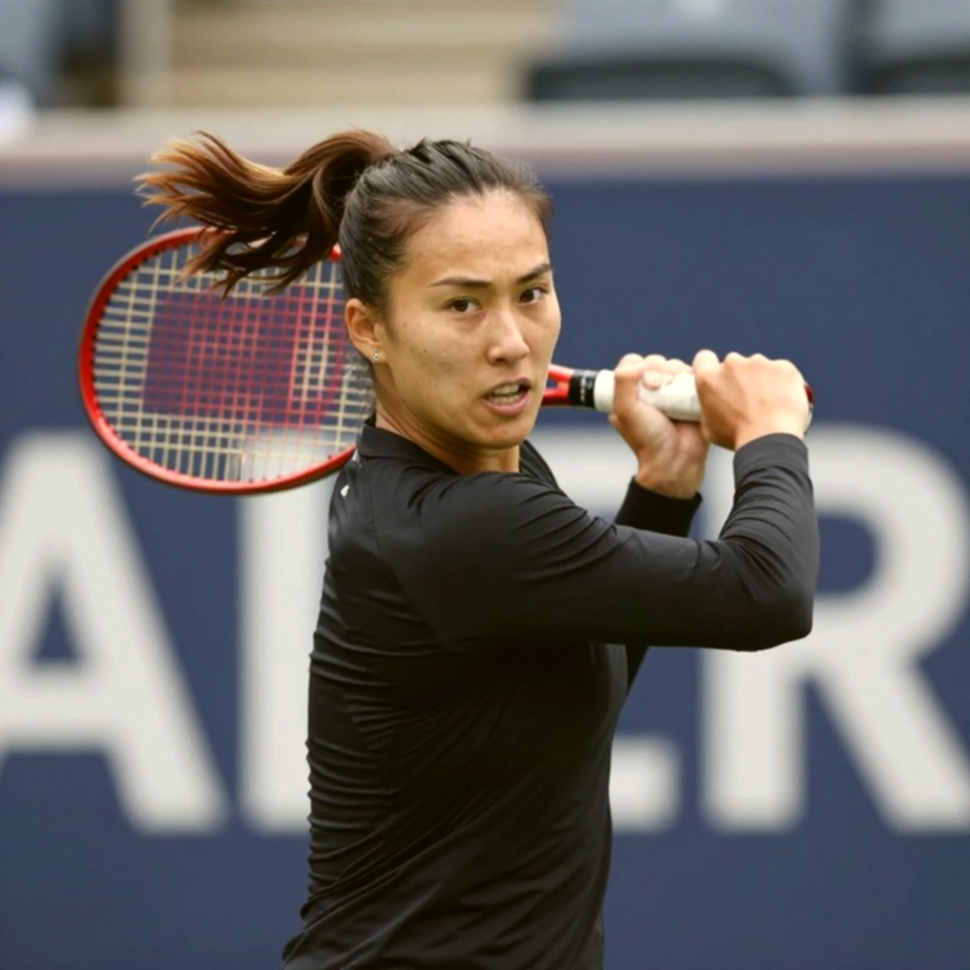
Those two hours and those eight games are the real subject of this report. The scoreline suggests a comfortable story: patience, experience, a comeback. Inside the scoreline is a less comfortable one. Her serve broke at the end of the match exactly as it had broken at the start. The eight games in the middle came from return position, baseline pressure and time stolen — not from the serve. A player who wants to win with her serve and loses with her serve has to be read in sequence before her win is treated as evidence.
Osaka hard court, the eighth seed, and the ledger of British No. 1
The Japan Open (women's singles, WTA 250) is being played on outdoor hard courts in Osaka. According to the report, Boulter beat Antonia Ružić in three sets, and the win will return her to the world's top 50 when the rankings update on Monday. It also restores her status as British No. 1, a designation she had lost in recent months. The other claimant in that race is Emma Raducanu, and for two years the contest has been settled on a spreadsheet rather than on a scoreboard.
Boulter is 29, born in August 2026. She owns three WTA singles titles — Nottingham 2026, Nottingham 2026 and San Diego 2026. All three came on grass or fast hard court, the surfaces that flatter her game. Her clay record is thin by contrast, and this is no secret. Her tennis rests on the first strike: serve, then a first shot from inside the baseline, then a second shot played early enough to take time away from the opponent.
This week in Osaka mattered for two reasons. First, she had not reached a deep round at any tournament in four months, and that is the most dangerous stretch in a player's calendar because match fitness and decision speed decline together. Second, this tournament gives her the surface on which her serve-plus-first-strike structure works. If you want to rebuild a player's confidence, you choose this court. The question is how durable the confidence is.
Where the match turned: not the serve, but a step inside the baseline
The most informative sentence in the source is that after losing the first set, Boulter began stepping inside the baseline to put pressure on Ružić. That is not decoration; it is the hinge of the match. Against an opponent whose second serve can be attacked, stepping in is the standard hard-court adjustment: you trade a little security for earlier contact time.
The match turned on return position, not on baseline superiority. When the returner stands inside the baseline, the server's reaction window shrinks. The second shot must be played earlier, and an earlier shot is either short or long. Both outcomes favour the returner. The change arrived after a 3-6 first set, and the eight-game run began immediately after it — a timeline that looks more like causation than coincidence.
One more detail is recorded: a crucial hold in the second set. Boulter served her way out of pressure at the moment she needed to. The serve was not absent; it was erratic. Erratic and absent are different problems, and the distinction will decide the semifinal.
The two-hour question: right result, wrong process
For the No. 8 seed at a 250-level event, three sets and two hours against an unseeded opponent is a process warning. A win is a win and nobody hands back a quarterfinal. But if you depend on the same body and the same patience in the next round, the two-hour bill comes due with interest.
Two hours and three sets say Boulter is searching for rhythm, not that she has found it. After four months without a deep run, that is expected. Match fitness is not merely the ability to run; it is decision speed — when to take risk, when to play safe, when to conserve. That speed is built by playing matches, not by practising. Osaka is a recalibration exercise, and by that measure winning the quarterfinal mattered more than winning it beautifully.
The eight-game illusion: a streak can be a collapse in disguise
Eight consecutive games looks dominant. In more than two decades of watching hard-court matches, I have learned that such a streak can be one of two things: a genuine jump in level, or a tactical and emotional collapse on the other side of the net. Against an unseeded opponent in a quarterfinal, the combination is the likeliest explanation.
Turning the eight-game run into "she is back at top-30 level" is premature. The streak proves that Boulter solved a problem once. It does not prove she will solve it every time. The distinction matters: problem-solving is a cognitive skill, and she displayed it here, which is a bigger win than the scoreline. But durability is only established when the same problem arrives in the hands of an opponent capable of breaking the solution.
The points arithmetic: the 250 structure and the top-50 return
The WTA 250 points structure is fixed: 250 for the title, 163 for the runner-up, 98 for reaching the semifinal, 54 for the quarterfinal, 30 for the last 16. Against that backdrop, the arithmetic of the British No. 1 return becomes clear. The quarterfinal win added 54 points, and 54 was enough to carry her back across the top-50 line. A semifinal win would raise it to 98; the title to 250.
British No. 1 is an administrative title, not a certificate of form. It is decided by a server that updates every Monday. It does not testify that a player can beat a top-20 opponent; it states that on a given date, one of two compatriots had more points in the account. The headline should therefore read "reclaims No. 1," and the subheading should not read "form returns." Rankings are a lagging indicator: they describe the previous 52 weeks, not this one.
India's tennis story is a useful comparison here. Leander Paes' 18 majors, Sania Mirza's six, Rohan Bopanna's two and his 2026 Australian Open title at 43 are all doubles numbers, while the national dream was always singles. The count is the column; the emotion is earned by the arithmetic. The same discipline applies to Boulter: the ranking is one column, and reading it separately from the form column is the job.
Data honesty: no claim without a number
In Cannes in 2026, a senior colleague said on the record that women cannot read a doubles return game. I started keeping a hand-drawn chart for every rubber — serve placement, return position, poaching rate — and I have not broken one rule since: no tactical sentence without a number behind it.
That rule is uncomfortable here. The available source gives a scoreline, a duration, a streak and a return-position adjustment. It does not give first-serve percentage, return points won, winners and unforced errors, or break-point conversion. Every process-level conclusion in this piece is therefore capped at medium confidence. A writer who makes firm claims without data is borrowing from the reader.
Inferences must be labelled as inferences. Ružić's ranking is not in the source, but the seeding order and the match shape suggest she sits outside the seeded tier and plays a rhythm-based, higher-margin baseline game — because the pattern of "disrupted early, then eight straight games once the opponent steps in" usually belongs to a power player being unsettled by a slower ball and then solving it by taking time away. That is an inference, not a fact. So is the likelier explanation that the step-in adjustment came from a coach at the set break rather than from spontaneous in-match realisation, since the pattern changed so immediately after set one.
The age truth the tour discusses quietly
Boulter is 29 and her game is movement-dependent. Standing inside the baseline to take the ball early requires explosive first-step quickness, and that is the first attribute to erode around thirty — not through injury, but through age. It is a cruel and well-established physical fact, and it comes up rarely in tennis conversation because it makes a player's story less romantic.
At 29, the practical route for a movement-dependent power baseliner is to shorten the rally, not to try to win inside it. That is precisely why a fast surface like Osaka is most valuable at this stage of her career. On a slower court the same game demands more steps, and the demand will not be met.
The outside misreading: "comeback" is doing too much work
From a distance the story reads straight: a British player reclaimed British No. 1, therefore she is back. It is convenient and it is factually consistent. The problem is that it fuses two separate events.
A ranking return is an accounting event — 52 weeks of points added and a line crossed. A playing return is a performance event — first-serve percentage, second-serve points won, energy spent over three sets. The first is announced on Monday. The second requires an opponent willing to push the player into discomfort. Osaka's semifinal supplies exactly that opponent.
The second misreading concerns the eight-game run. On television, eight straight games look like a change of level. From courtside, the same eight games show one player solving a problem and the other losing the will to keep presenting it. Neither reading is complete, but accepting only the first is incomplete reading.
The semifinal: Kateřina Siniaková is the archetype that neutralises this game
Now the forward part. Boulter's semifinal is against Kateřina Siniaková. The source calls her a dangerous opponent, and that is not routine politeness. The Czech is an elite doubles player with a career Grand Slam and Olympic gold in doubles to her name. Being elite in doubles implies a very specific skill set: exceptional hands, return consistency and natural net instincts.
That is precisely the archetype that neutralises a flat first-strike game. The reason is simple. A first-strike player wins by stealing time; a player with good hands absorbs the ball and lengthens the rally. The moment a rally crosses seven shots, control changes hands, because Boulter is then asked to do the thing that is not her natural work: sustain patience across many balls.
Siniaková has another underrated weapon — she is able to neutralise a second serve rather than attack it. Against a fast returner she can take pace off with slice and spin, breaking the aggressive player's rhythm. That is the same problem Boulter faced in the first set against Ružić, only better executed.
This does not erase Boulter's chances. It means she has to stand inside from the first set rather than after losing one. A one-off solution saves a match; a repeatable solution saves a tournament.
Mailbag: why stand inside the baseline on a second serve?
One question arrived three times this week, and since it sits at the centre of this match, it belongs here.
A reader asked: "When a returner steps inside the baseline, isn't her own defence weakened? Can't the server push her back with a lob or a flat serve?"
The answer is that the server can, and often does. The difference is risk tolerance. On a first serve the server can attack fully because a miss buys a second chance. On a second serve the server plays safe — slower pace, higher arc, more margin. That ball is easy for a returner standing behind the baseline but also harmless, because it gives her no time to attack. A returner standing inside takes that same soft ball and sends it back at the server's feet or into the angle, denying the server the comfort of playing on her own terms.
That is why the adjustment is most common on hard courts and rarest on clay. On clay the ball sits up, so the returner standing in gets beaten by the bounce. On hard court the ball arrives flat and quick, so stealing time is possible. Boulter did exactly what her surface and her opponent demanded, and that is the best signal available this week.
The mailbag taught me that endings are written by readers. This time a reader pushed the most technical part of the match to the front, and I think he was right.
What to watch next
Three things in the semifinal, all of them numbers, because matches are not read through feeling.
First, Boulter's first-serve percentage across the first four games. Above 60 and she is in the match; around 50 and she will have to survive on return again — and surviving on return against Siniaková costs far more than it did against Ružić.
Second, the ratio of second-serve points won. That is the statistic that will tell us whether the two broken games this week were a pattern or two separate accidents.
Third, average rally length. If it climbs above seven shots, the match is being played on Siniaková's terms, whatever the score says.
I count the people before I count the words, and this week there were very few people at the edge of that Osaka court — a 250 quarterfinal, a player rebuilding her ranking, an opponent whose name rarely leaves the scoreboard. The press room has a pulse; the team bus keeps the beat. There was no bus here, only a scoreboard and a player fighting her own serve.

Every byline carries a boarding pass and a deadline, and this deadline left me one question that Monday's rankings will not answer. The first four games of the semifinal will. If Boulter is standing inside in those games, this was a quarterfinal. If she is standing back again, this was one more Monday list, and nothing more.