
Suspension Before the Verdict: Tepatitlán's Betting Case and the Weight of Appendix IV
FMF अनुशासन आयोग ने प्रमोशन दौड़ के बीच टेपाटिटलन डी मोरेलोस के खिलाड़ियों पर परिशिष्ट IV के तहत सट्टेबाज़ी अखंडता का नया मामला दर्ज किया है। विलालपांडो डोराडोस मैच से बाहर रहे; अन्य खिलाड़ियों पर जाँच तक निलंबन है, नाम गोपनीय हैं। Key facts: - FMF ने टेपाटिटलन खिलाड़ियों के ख़िलाफ़ परिशिष्ट IV (प्रतियोगिता अखंडता) के तहत मामला दर्ज किया। - विलालपांडो को डोराडोस डी सिनालोआ के ख़िलाफ़ स्क्वाड से बाहर रखा गया। - जाँच पूरी होने तक अनाम खिलाड़ियों पर प्रतिस्पर्धा से निलंबन लागू है। - आयोग ने खिलाड़ियों के नामों का खुलासा नहीं किया; सुनवाई का अधिकार सुरक्षित है। - मामला प्रमोशन की लड़ाई के बीच दर्ज हुआ, जिससे खेल और वित्तीय लागत अधिकतम है। स्रोत: FMF अनुशासन आयोग का आधिकारिक वक्तव्य; प्रकाशन तिथि: दर्ज नहीं। Related Q&A: - क्या विलालपांडो पर आधिकारिक प्रतिबंध है? — फ़िलहाल स्क्वाड से बाहर रखे जाने की पुष्टि है; निलंबित सूची में नाम गोपनीय है। - क्या टेपाटिटलन पर क्लब-स्तरीय सज़ा संभव है? — यदि व्यवस्थागत संलिप्तता सिद्ध होती है तो संभव है; फ़िलहाल कोई संकेत नहीं। - मामला कितने समय में सुलझेगा? — आयोग ने जाँच पूरी होने के बाद फ़ैसले का संकेत दिया है, कोई तय समय-सीमा नहीं।
That evening, when Club Deportivo Tepatitlán de Morelos published its team sheet for the match against Dorados de Sinaloa, one name was missing. No red card, no official injury note, no standard "rested" line. Villalpando — the same name that had been circulating on social media for the previous 48 hours alongside "allegedly leaked conversations" — was not even on the bench. An absent name on a team sheet says more than a red card, because a card is a decision; this absence was a wait. The Disciplinary Commission of the Federación Mexicana de Fútbol (FMF) had not yet said anything publicly when the club had already pulled its player away from the pitch.
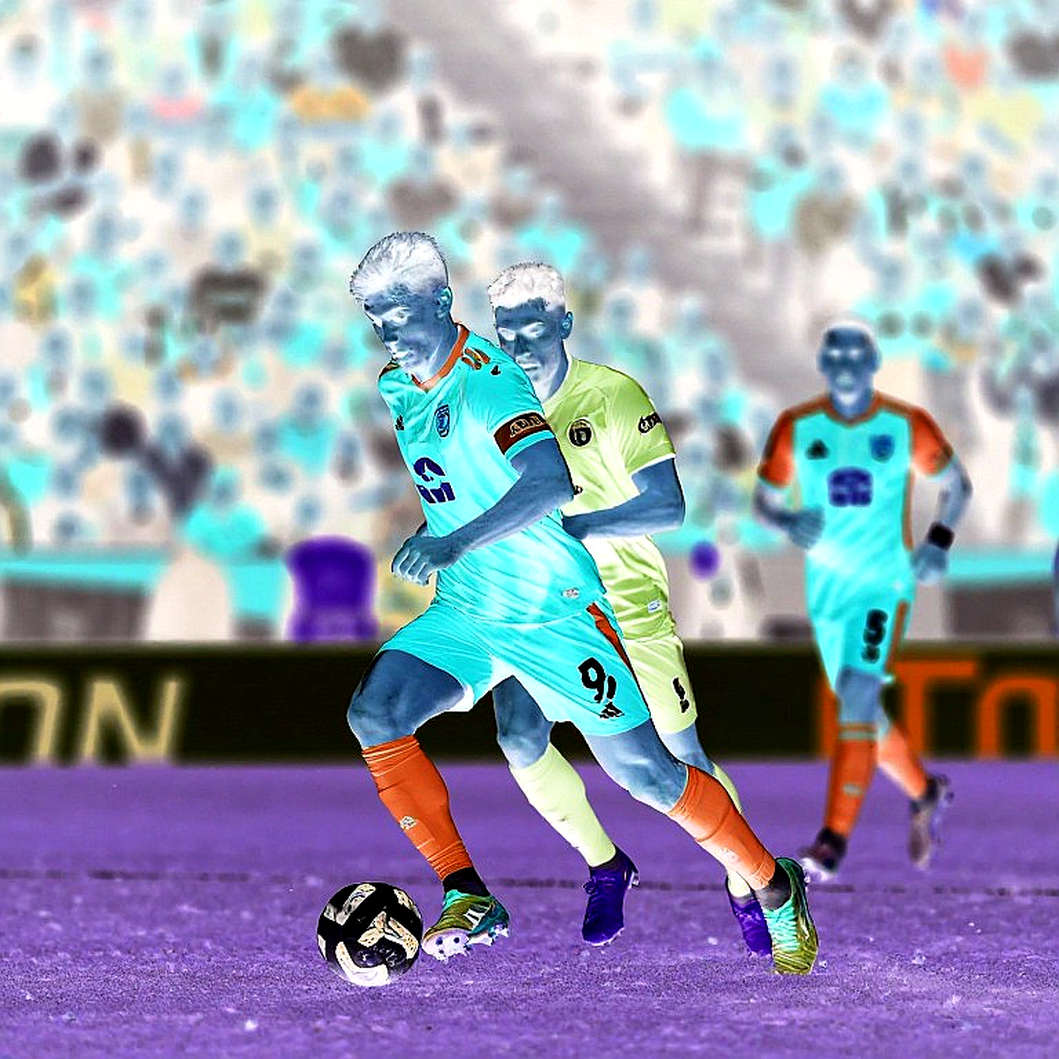
I have been collecting such team sheets for several seasons. I carried a clipboard nobody asked for; four weeks later it was the only record. In this case, too, the first record is that team sheet. Everything else — the accusations, the leaked conversations, the unnamed players, the suspension — revolves around that one sheet.
Liga de Expansión MX is the second tier of Mexico's football pyramid — a league whose economic logic is to prepare assets for the top division, Liga MX. Loaned players, small-city clubs, small centrally pooled broadcast revenue, and one thin path of upward sales. The promotion ladder has been rebuilt in Mexico again and again — financial certification, playoff formats, at times a suspended promotion. That is why, when the Commission registers a new case "in the middle of the fight for promotion," it is not merely a disciplinary notice; it is pressure applied to the most sensitive part of an entire business model.
Tepatitlán de Morelos is a small-city club from the Los Altos region of Jalisco — distinct from the Guadalajara metro satellite clubs, with its own local identity. It sits in the layer of the pyramid where wages are low, the stake is high, and a large share of the squad runs on loans and high turnover. These three conditions are the classic economic backdrop for betting-related misconduct in any league. That is why this case is less about Tepatitlán and more about the part of the Mexican pyramid that investors perceive as an "unreliable product."
The report I received is not structured as a player-centred scandal. It is a filing event, with its own date and its own clause. The basis is Appendix IV of the FMF Code of Ethics and Sanctions Regulation — competition integrity. I have spent years reading those three hundred and twelve pages of small print, and in this case Appendix IV has done all the work. Everything else — the social-media accusations, the leaked conversations, the exclusion from the squad — revolves around that single clause.
The intent of Appendix IV can be understood in one sentence: the integrity of the competition must remain intact. The language of the rule is clear. The real test is the evidence, which in this case rests on anonymous social-media accounts and "allegedly leaked conversations." Under any disciplinary standard, that is a weak foundation — and on this weak foundation, a suspension has already been imposed. This case will be won or lost not on legal interpretation, but on the forensic authentication of digital evidence.
I built my spreadsheet of all sixty-four matches of the 2026 World Cup the same year VAR arrived — a record 29 penalties, the first VAR-awarded penalty in a final, Perišić's handball, 15 July, Luzhniki. That experience taught me that protocol does not change overnight, but an entire procedure can bend on a lack of evidence. Here stands the same wall: the rule is easy, the proof is hard.
The heaviest sentence in the document is not the one that will set the fine. The heaviest sentence is the one that says: until the investigation is complete, the players may not take part in competition. That converts the presumption of innocence into an immediate sporting sanction — and creates a risk no court can take back. If the players are later cleared, the competition taken from them cannot be re-run. This procedural reversible-error risk is greater than any single player's mistake — it is the system's own latitude. That is why a pre-trial suspension must always be weighed on the scale of proportionality: is this the protection of the competition, or a sanction already served?
The Commission has preserved the right of a hearing — the garantía de audiencia. This short sentence is the backbone of the entire procedure. But the moment a suspension is imposed first, the right to a hearing stops being a formality; it becomes a defence that must be proven at a sprint. And here is the asymmetry of this case: the legal architecture is unusually clear, while the evidentiary architecture is unusually weak.
The Commission has not named the players. Legally, that is defensible — data protection, presumption of innocence. But operationally, it works in reverse. The market, the media, and the club's own planning cannot price a risk whose dimensions are hidden. How many players? In which positions? How many in the starting eleven? All unknown. The biggest statistic in this file is the data that is not in the file.
And the most permanent damage is the kind that can never be corrected: the players who are eventually cleared will never receive headlines equal to the anonymous suspicion they receive now. This reputational asymmetry is the only irreversible punishment in the entire case. It cannot be fixed by any verdict, because the news of acquittal is always smaller than the news of accusation.
The financial risk is not the fine; the financial risk is the freezing of assets. Second-tier Mexican clubs run on a business model of selling and loaning upward. A suspension effectively places an embargo on their most liquid inventory — precisely at the moment when promotion would have maximized its value. An unresolved case is worse than a resolved sanction: a defined ban can be amortised, impaired and planned around; an open investigation leaves the asset in limbo indefinitely.
The club now faces contractual decisions that must be made before the Commission rules — fielding the player, paying him, or isolating him. Each of these steps is a legal exposure separate from the sport. Most professional contracts include integrity-breach clauses that permit termination for cause. If the club takes that route, a wage liability turns into a dispute — cash-flow relief, but litigation cost.
Excluding Villalpando from the squad before the Dorados match is a signal: the club had information before the Federation's public statement. It cannot be known whether that decision was caution, discipline, or purely sporting selection. But one thing is clear — the club was already managing its work around the case, and the outside world received only a team sheet as evidence.
That team sheet also reveals that the sporting cost is concentrated at the highest-leverage point. Losing squad depth in the middle of a promotion race is different from an ordinary injury risk, because here suspicion touches trust inside the team itself. In a playing style that requires collective synchronisation — pressing triggers, coordinated defensive lines — an accusation directed at a teammate slows decision-making and shrinks risk appetite. This is a hypothesis, not a conclusion drawn from the file. But in disciplinary cases, the externally visible cost is always underestimated.
There is also the risk of opponents' perception. In the shadow of an integrity investigation, any disputed goal, any penalty, any red card will be seen through a second lens. It cannot be measured, but it cannot be ignored. When a club is registered as a "new chapter" — and the word "new" in the report implies earlier episodes — its institutional position has acquired a permanent tag. This tag is independent of the verdict: in recruitment, in sponsorship, in partnerships.
Mexican football has a limited public record of betting-integrity enforcement at the second-tier level. That is why this case is bigger than its own verdict. Whatever standard the Commission sets — the threshold of evidence, the practice of suspension, the scale of sanction, the policy of name disclosure — will become the template for the next case. In the history of FIFA and confederations, match-manipulation bans have been measured in years, not matches. But the real question here is not the sanction; the real question is whether this procedure will run on evidence that has never undergone forensic scrutiny.
Mexico's federal gaming law — the Ley Federal de Juegos y Sorteos — and SEGOB licensing take a different path. A player betting and match manipulation are not the same in legal terms. This distinction sits at the centre of the case, because the language of accusation mixes betting and manipulation together, while the disciplinary procedure weighs them on separate scales. Keeping that distinction clear is the greatest legal duty of this file.
The honest reader will now ask: a suspension without confirmed evidence? This is where I will argue the opposite. A pre-trial suspension is only correct when there is an immediate risk to the integrity of the competition; in this case, that condition is met. So the problem is not that the suspension was imposed; the problem is that it was imposed on evidence whose foundation has yet to be built. The real danger is even more counter-intuitive: when the demand for a verdict is so loud that the procedure shrinks. The demand for names on social media, the cry for instant punishment — that is the pressure that weakens disciplinary justice.
I went looking for a villain and found a filing system instead. The filing system was not broken; it was incomplete. Enforcing rules after a leak is not a system; a system is what detects before the leak. How strong that early-warning mechanism is in the Mexican second tier is the biggest unanswered question of this case. Market monitoring, betting-pattern data, club-level education — none of these are in the file, but the next case will be decided by them.
This case will shape the Liga de Expansión promotion race over the next five seasons in the same way its procedural map is drawn. If the Commission sets a clear standard for the authentication of digital evidence and a fixed disclosure timeline, the next case will be shorter. If the path chosen is to withhold names and stretch the investigation across an entire season, the damage will compound. I am not predicting on whom this case will fall; I am saying that whatever standard is set today will be tomorrow's floor. The next case will be decided by this same procedure — and that is why Appendix IV must speak now, whether anyone wants to listen or not.