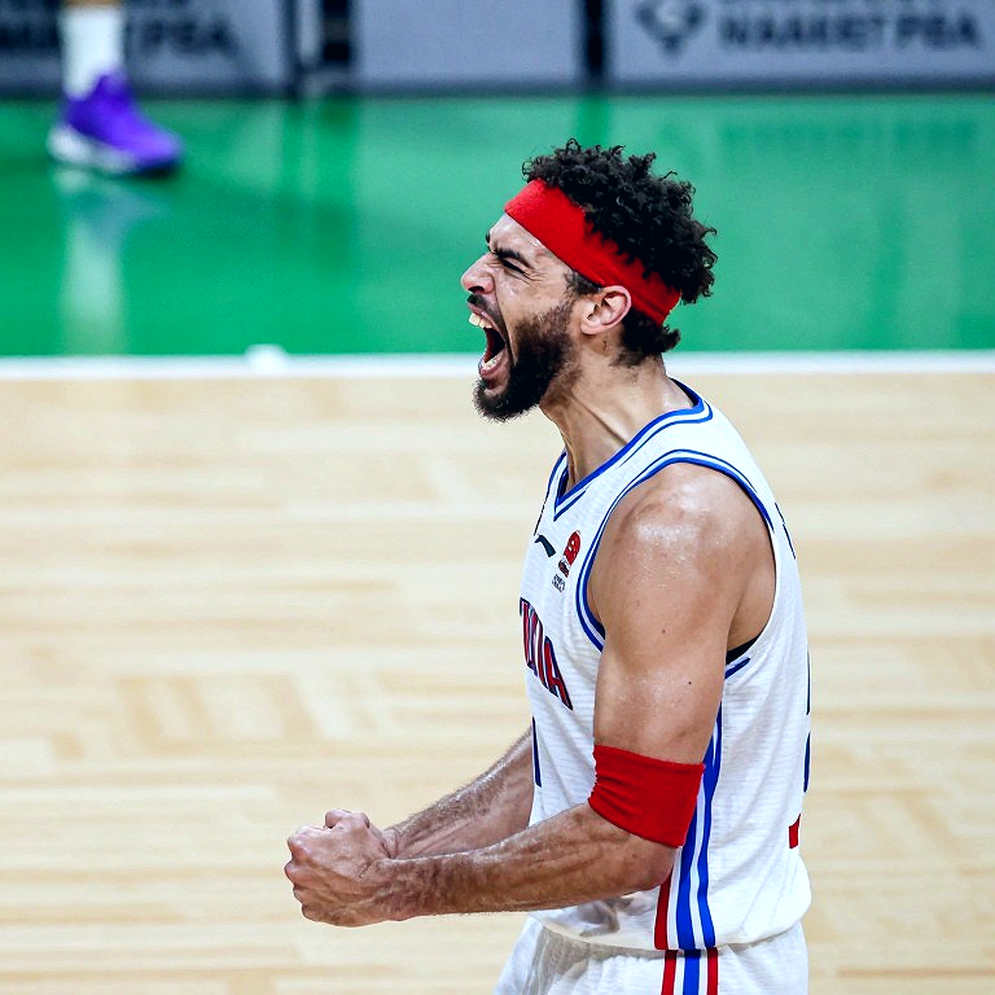
Four Cities, Nine Days, 2-2: For Fenerbahçe, the Lesson Matters More Than the Loss in Madrid
फ़ेनरबाह्चे बेको ने यूरोलीग में नौ दिनों के भीतर चार अलग शहरों में चार मुक़ाबले खेलकर 2-2 का रिकॉर्ड बनाया, जिसमें रियल मैड्रिड के मैदान पर मिली हार भी शामिल है। टीम के फ़ॉरवर्ड ब्रैक्सटन की ने कहा कि हर मैच में मुश्किलें आईं, लेकिन टीम ने कभी एक-दूसरे को दोष नहीं दिया और लड़ना नहीं छोड़ा। उन्होंने यह भी कहा कि सीज़न अभी बहुत शुरुआती दौर में है, टीम अपनी लय ढूंढ रही है और बड़ी चीज़ों में वक़्त लगता है। यूरोलीग में मेज़बान टीमें ऐतिहासिक रूप से लगभग दो-तिहाई मैच जीतती हैं, इसलिए दावेदार टीम के लिए चार में से दो जीत औसत से थोड़ा बेहतर मानी जाएगी, न कि संकट। रियल मैड्रिड के घर पर हारना लगभग हर क्लब के लिए अपेक्षित है और अकेले इससे टीम के स्तर का आकलन नहीं किया जाना चाहिए।
Four straight games, nine days, four different cities — the yellow-and-navy Turkish club Fenerbahçe Beko returns home from an early-season EuroLeague road swing with a 2-2 record. The trip ended with a defeat at the hands of Real Madrid, after which the team's forward Braxton Key said that whatever the results, one thing never changed inside the group: trust in each other.
This is not a box-score report. No 30-point night, no miraculous fourth-quarter turnaround. What exists is far more basic and perhaps far more important: a team navigating the most exhausting stretch of its season without coming apart.
Four cities, nine days — this is not easy
The reality of European basketball is that its travel is nothing like the NBA's. In the NBA, teams fly charter, back-to-backs come with a rest structure, and the calendar is built around it. The EuroLeague is not. Double-game weeks are routine here — two games in one week, in two different countries — and on top of that come the demands of the domestic league.
For Fenerbahçe, this trip was the product of exactly that equation. Four cities, nine days, four games — one after another, with no room to breathe. Key himself underlined that the team faced difficulties in every single match. No game was a comfortable win, and no game was a complete collapse.
That is what makes this 2-2 interesting. Look only at the record and it seems average. Look at the context and it is slightly better than average. In the EuroLeague, home teams have historically won roughly two-thirds of games. Two wins out of four on foreign floors, amid such a punishing travel schedule, is no disaster. It is the kind of performance a contender accepts at this point of the season — provided it learns from it.
"Nobody blamed anybody"
The most important thing to emerge from the post-defeat conversation was not tactical but psychological. Key said the team never blamed each other and never stopped fighting for each other.
In sports journalism, sentences like these are often dismissed as clichés. But there is rarely a better signal of dressing-room health during a losing stretch. When a team is not winning consistently, the first thing that breaks is the accountability structure: someone starts counting others' mistakes, someone complains about minutes, someone leaks to the media.
Here the opposite happened. A player who is relatively new to the team is publicly speaking in the language of "we" — not a single line of personal complaint, not a single demand for his own numbers. That is a signal in itself. For a newly arrived import, it is not easy to show that he is team-first, especially when the team is sitting at .500 and everyone's role is being questioned.
There is another angle. The fact that an imported newcomer is being positioned as the team's spokesperson this early in the season suggests the club's leadership structure is relying on him for more than a bench role. The information is thin, but the signal is clear.
What 2-2 actually means
The only hard data point from this trip is this: four cities in nine days, four games, two wins, two losses. No offensive rating, no defensive rating, no pace. What is available is the result and the mood.
Even within those limits, some things can be said. First, the team never built a big lead in any game and never lost badly in any — the "difficulties in every match" line points to exactly that. Second, for a contender, winning through effort early in the season while feeling that the game is not yet sharp is not bad news. Third, and most importantly — coming out of a road swing like this at .500 is often a better sign than a soft 4-0 at home, because it stress-tests both bench depth and cohesion.
Note, though, that there is a risk here too. Lines like "we never stopped fighting" also appear when a team is compensating for a lack of cohesion with sheer spirit. That is not necessarily bad, but it is a warning: spirit alone does not carry a season to its end. If clarity does not arrive, that same spirit will fall short in May.
No reason to panic over a loss to Real Madrid
This should be said plainly: losing at Real Madrid in the EuroLeague is the expected outcome for almost every club. Madrid is the biggest institution on the continent, and a defeat on its floor says very little about any team's ceiling. Over-reading it would be a mistake.
The real question is how the team looked in the other three games. Two wins and one loss amid this punishing travel schedule is a reasonable floor for a contender. The lesson is not that there is a crisis; the lesson is that the edge is not there yet, but the foundation is intact.
Beyond that, early-season results have very low predictive power. The EuroLeague table often churns through October and November; the team sitting third today can be eighth by January. Treating this 2-2 as the basis for any team-tier assessment would be premature.
"Still looking for our rhythm"
The most important word in the comments was rhythm. It was also said that there are many lessons to be learned and that big things take time.
That language does not appear by accident. When a big-budget, title-aspiring club talks about "rhythm" early in the season, it is usually not a story about a lack of talent but about new pieces coming together. Summer turnover, the time new players need to blend in, roles being settled — all of it has a cost, and that cost is paid in October.
There is a technical dimension attached as well. European basketball runs on FIBA rules — a shorter three-point line, no defensive three-seconds, more physicality. For a forward arriving from the NBA, that changes both spacing and role. If a player is talking about "rhythm" right now, it is reasonable to include this rule gap in the picture — though there is no direct evidence of it in this report.
Where the fatigue bill was actually paid
One more thing that gets little attention: four cities in nine days was not purely a EuroLeague schedule. Turkey's domestic league runs on the same calendar. In such conditions, any coach is forced into a decision — where to go all-in and where not to.
There is no formal "rest penalty" rule in the EuroLeague as there is in the NBA, so resting players is not a compliance matter but the coach's own call. The consequence is that in heavy travel weeks, a defeat somewhere in the domestic league gets recorded, and it never shows up in the EuroLeague table. If Fenerbahçe dropped a domestic game during this trip, that is the hidden cost of this 2-2.
What comes next
The biggest positive in this whole story is that there is no upheaval despite the defeat. No talk of a coaching change, no contract dispute, no star player complaining in the media. What is on offer is a process-oriented message — "it will take time," "we will learn."
That is the mentality of a club that trusts process over results, and that is pacing itself for spring, not October. It is not a risk-free path — if the rhythm arrives late, the gap widens. But the signals so far show a team that is tired, not fractured.
Four cities, nine days, two wins, two losses. In the numbers, it is an average line. In context, it is the story of a team that got through its hardest week without breaking — and that believes its best is still ahead.