
Asian Champions Trophy: For Bangladesh, Seven Days of Calendar Matter More Than Tactics
**मुख्य उत्तर:** बांग्लादेश की पुरुष हॉकी टीम एशियाई चैंपियंस ट्रॉफी में सात दिनों में पाँच लीग मैच खेलेगी, जिनमें दो बैक-टू-बैक जोड़े (29–30 अक्टूबर और 1–2 नवंबर) शामिल हैं; इस कैलेंडर घनत्व के कारण बेंच-डेप्थ निर्णायक चर है, रणनीति नहीं। **मुख्य तथ्य:** - छह टीमों का सिंगल राउंड-रॉबिन; 27 अक्टूबर को भारत के खिलाफ़ ओपनर। - दो शून्य-आराम टर्नअराउंड; चार-क्वार्टर, असीमित रोलिंग सब्स्टीट्यूशन प्रारूप। - 14-दिवसीय कैंप केवल सेट-पीस स्थापना और फिटनेस टॉप-अप के लिए पर्याप्त। - पेनल्टी कॉर्नर रूपांतरण, ड्रैग-फ्लिकर और हेड-टू-हेड डेटा रिपोर्ट में अनुपलब्ध। - FIH विश्व रैंकिंग बैंड 30–35 (अनुमानित, सत्यापन लंबित)। **स्रोत:** स्टेज-2 गहन विश्लेषण, एकल-स्रोत ब्रीफ़ (आंतरिक बाइलाइन ‘AZ/AHS’); आयोजन संस्करण और फ़ील्ड संरचना का क्रॉस-चेक लंबित। **संबंधित प्रश्नोत्तर:** **प्रश्न: क्या ACT ओलंपिक क्वालिफिकेशन मार्ग है?** उत्तर: नहीं; एशियाई खेलों का स्वर्ण विजेता सीधी ओलंपिक बर्थ पाता है, ACT केवल FIH रैंकिंग अंक और एक्सपोज़र देती है। **प्रश्न: बांग्लादेश का सबसे संभावित परिणाम क्या है?** उत्तर: पाँचवाँ-छठा स्थान; सेमीफ़ाइनल के लिए चीन या जापान में से किसी एक को हराना अनिवार्य है। **प्रश्न: सबसे बड़ा अनसुलझा डेटा सवाल कौन-सा है?** उत्तर: पेनल्टी कॉर्नर रूपांतरण दर — यह आंकड़ा उपलब्ध नहीं है, और टियर-3 टीम के लिए यही सबसे निर्णायक होता है।
Seven Days, Five Matches, Two Zero-Rest Turnarounds
“We will try to give our best in every match.”
The Bangladesh men’s hockey captain is quoted saying this in the departure-day report. I read it three times. The first time it sounded polite. The second time it sounded hollow. The third time I realised the sentence is itself the story — because of what it does not contain. No semi-final target. No top-four. No ‘avoid last place’. Only ‘best’.
The real story is not in the quote but in the sheet that travels with it: the fixture list. India on 27 October. Match two on 29 October. Match three on 30 October. Match four on 1 November. Match five on 2 November. Five matches in seven days, with two back-to-back pairs carrying zero rest days — 29 into 30 October, and 1 into 2 November.
Four quarters, fifteen minutes each, unlimited rolling substitution. This format tests the bench, not the legs. And Bangladesh’s bench — semi-professional players, a thin roster — was not built for that test.
This is not a match prediction. It is a structural assessment of a Tier-3 Asian programme entering a continental tournament in which the calendar speaks before the tactics do, and in which the loudest fact is that the media brief contains not a single penalty-corner number.
Context: What This Tournament Is, and Is Not
The Asian Champions Trophy (ACT) is the continental second tier of the FIH calendar — below the Olympics and the World Cup, and below the Asian Games in qualification significance. That is not stated in the report, and it is the single fact that defines the tournament’s meaning. The Asian Games champion takes Asia’s direct Olympic berth. The ACT offers FIH world ranking points and international exposure. For Bangladesh it is a ranking-and-exposure instrument, not a pathway event.
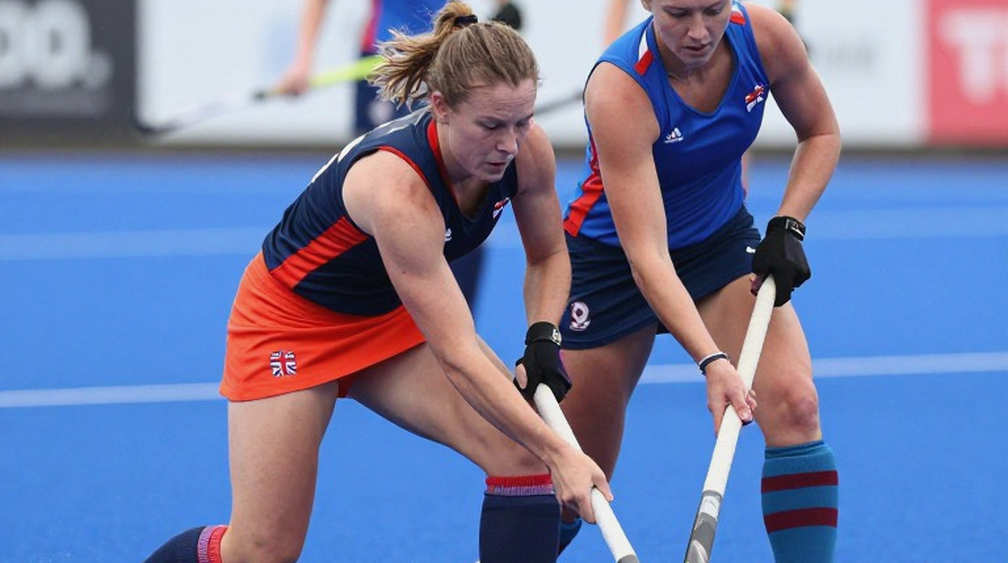
Bangladesh’s ACT record is short and not recent. Dhaka hosted in 2026, where Bangladesh finished bottom of a five-team field, including a heavy defeat to India. That is the data point the departure-day report omits. A programme with a recent competitive high point cites it; silence is diagnostic.
The field as reported: India, Japan, Malaysia, South Korea, China, Bangladesh. Single round-robin. Four semi-final places. Semi-finals and placement matches on 4 November, final on 5 November.
A professional caveat is required. The reported edition — Punjab (Jalandhar/Mohali), 27 October to 5 November — does not match verified ACT editions. The 2026 men’s ACT was played in Chennai from 3 to 12 August; the 2026 edition in Hulunbuir, China, from 8 to 17 September. Neither venue nor window matches. A second anomaly: Pakistan is absent from the field, though Pakistan was a near-permanent ACT participant from 2026 to 2026, while Bangladesh appeared essentially only as the 2026 host. This analysis is therefore conducted as a structural assessment, not a match forecast.
Core Analysis: Where the Jargon Ends, the Calendar Begins
Finding one — five matches in seven days is a tactical fact, not an administrative one. A four-quarter match is roughly sixty minutes of high-intensity work with fresh legs arriving at every break. A squad with twelve or thirteen players of equal level survives; a squad with eight collapses in the third quarter. Bangladesh’s model is semi-professional, with jobs, club commitments and no central contracts. A fourteen-day camp is the consequence of that structure, not a mistake within it. Bench depth is the dominant variable, and bench depth cannot be built in fourteen days.
Finding two — the opener against the host is a tournament-position risk, not merely a loss risk. In a six-team single round-robin, the fourth semi-final place is often decided on goal difference. Opening against India — host, strongest side, and the team that beat Bangladesh heavily in Dhaka in 2026 — likely damages goal difference before the squad has adapted to tournament tempo. Goal-difference pressure kills creativity, and creativity is Bangladesh’s only real strength.
Finding three — fourteen days can install set-pieces and top up fitness; it cannot restructure a game model. The stated camp focus, ‘fitness and tactical play’, reads as media-facing boilerplate. A brief written for a Tier-3 side facing five superior opponents would foreground the low block, 23-metre defensive organisation and penalty-corner defence. None appear.
Finding four — the penalty-corner blind spot. The report names no drag-flicker, no first runner, no conversion rate, no corner count. For a Tier-3 side, penalty corners typically carry an outsized share of total scoring, because open play is scarce and set-pieces are where physical inequality matters least. A team without that data is not accounting for its biggest weapon.
Finding five — a labelled style inference. South Asian Tier-3 programmes below India and Pakistan typically show a skill-first, individual-dribbling profile, weak collective structure, vulnerability to the high press in build-up, and a marked physical drop-off in Q3 and Q4. Against India’s and Malaysia’s structured possession-and-press models this tends to produce territorial collapse rather than controlled losses. Bangladesh’s route runs through a deep block, slow tempo and set-pieces — all installable in fourteen days, if anyone chose to install them.
Finding six — the ranking trap. Bangladesh sits roughly in the world No. 30–35 band (approximate, pending verification). FIH ranking points are heavily influenced by participation frequency, so a team that plays few ranking-bearing matches can be under-ranked and over-performing its ranking at once. Any ranking-based read is a wide confidence band, not a point estimate. There is no weak-side data padding in this draw; all five opponents sit above Bangladesh in the Asian hierarchy.
Finding seven — the verification problem is itself the story. The single-source brief carries only an internal byline, ‘AZ/AHS’, and no named agency. Its venue and window do not match verified editions; its departure day and opener date are internally inconsistent; its field composition is anomalous. I flag rather than dismiss. The analytical implication is that this must be read as preparation assessment, not prediction.
Contrarian Angle: What Was Not Said Says the Most
The standard preview says Bangladesh must improve tactics, fitness and youth opportunity. All three are correct and all three are useless, because none explains what decides results in this specific tournament.
My first counter-intuitive finding: the schedule, not the opponent, is Bangladesh’s biggest problem. Five matches in seven days with two zero-rest turnarounds is arithmetic, not sentiment. My second: the captain’s target-free quote is deliberate de-risking, and the most honest thing in the report. When a federation’s internal assessment is a bottom-two finish, captains are briefed to avoid public targets. My third: the omitted 2026 Dhaka result is the real benchmark — a programme hides its most recent continental performance only when it does not wish to repeat it.
Rule changes and calendar chaos have shaped Indian hockey’s fortunes more than any coach ever did, and the same argument applies to Bangladesh with greater force. When your preparation window is fourteen days and your opponent’s is six weeks, the argument is about the system, not the coach.
Two codes in one rule laboratory: the experiment begins where the jargon ends.
Takeaway: 4 November Is Bangladesh’s Real Final
If structure holds, Bangladesh’s tournament will be decided in the fifth-sixth placement match on 4 November, not the final on 5 November. That is not a downgrade. For a programme whose most recent continental record is last place in a five-team field, fifth is improvement, sixth is stability, and fourth — a semi-final — would be a genuine achievement measured against 2026.
What I will watch: Bangladesh’s build-up shape in the first quarter against India; its physical state in the third quarter on 30 October; and who takes its penalty corners, and how often they change.

The last final was never the last word; it was the first podcast. For Bangladesh, 5 November will not be the last word either. The real record will be whether the next calendar cycle widens that fourteen-day window. If it does not, the captain will say the same thing again — and no one will have been told what ‘best’ was measured against.