
28.1 Overs, 169 Balls and a Hamstring: WA’s WACA Draw the Scorecard Cannot Explain
उत्तर: पश्चिमी ऑस्ट्रेलिया ने शेफील्ड शील्ड में न्यू साउथ वेल्स के खिलाफ 28.1 ओवर बचाकर ड्रॉ हासिल किया; 9-205 पर सिमटी WA की आखिरी जोड़ी ने 169 गेंदें खेलीं। • WA को 364 का लक्ष्य था; 28.1 ओवर बाकी थे और स्कोर 9-205 था। • जोएल पेरिस 25* (82 गेंद) और जोएल कर्टिस 19* (113 गेंद) नाबाद रहे। • सैम कॉन्स्टास ने 71 और 151* रन बनाए; वह प्लेयर ऑफ द मैच रहे। • बेन द्वारशुइस ने 4-50 और तानवीर संघा ने 2-43 विकेट लिए। • WA की दूसरी पारी तीसरे दिन 3-30 और चौथे दिन 5-143 पर लड़खड़ाई। स्रोत: cricket.com.au की मैच रिपोर्ट; प्रकाशन तिथि स्रोत सामग्री में उल्लिखित नहीं। प्रश्न: क्या यह ड्रॉ मौसम की वजह से था? उत्तर: नहीं, रिपोर्ट में बारिश या रोशनी की रुकावट का जिक्र नहीं; यह मैदान पर बचाया गया ड्रॉ था। प्रश्न: क्या कॉन्स्टास का 151* टेस्ट चयन के लिए पर्याप्त है? उत्तर: एक मैच का नमूना पर्याप्त नहीं; विरोधी आक्रमण की गुणवत्ता और निरंतरता देखनी होगी। प्रश्न: WA की असली चिंता क्या है? उत्तर: टॉप ऑर्डर का सत्र-अंत में ढहना और पेरिस की हैमस्ट्रिंग चोट।
The last session of the fourth day at the WACA had a scoreboard that looked like a verdict: 9-205, 28.1 overs left, one wicket for New South Wales. Joel Paris was at No.11 with a hamstring injury and a runner. At the other end was Joel Curtis, the wicketkeeper-batter, 19 not out off 113 balls. Every time Tanveer Sangha came in to bowl, the fielders closed in until the bat seemed to be standing in a ring of shoulders. The commentary still carried the word “target”, but the real contest was with the clock. I watched it from Delhi, late at night, the room quiet, the screen holding only a red ball and white pads. In such passages, cricket’s most honest score is not how many runs, but how many balls were survived.
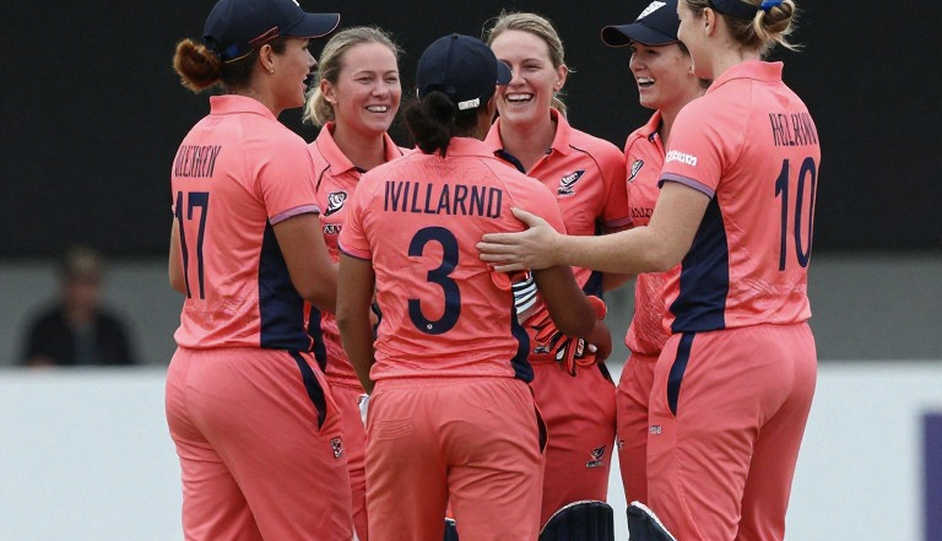
This was the Sheffield Shield, Australia’s four-day domestic red-ball competition, where a draw is a legitimate result. According to cricket.com.au’s match report, Western Australia were set 364. New South Wales’s Sam Konstas made 71 in the first innings and 151 not out in the second; he was named Player of the Match in a game his side did not win. WA’s second innings had collapsed to 3-30 at the end of day three—Cameron Bancroft 11, Sam Whiteman 17, nightwatchman Corey Rocchiccioli 0. On day four, Liam Haskett made 17 off 101 balls and Goodwin 67 off 165, before WA went from 5-143 to 9-205. Ben Dwarshuis took 4-50 and Sangha 2-43. No rain or bad-light interruption appears in the report. This was an earned survival draw, not a weather draw.
We have been taught to read the WACA through old books: Australia’s fastest, bounciest surface. The modern WACA tells a different red-ball story. After redevelopment, its pace lives more on paper than in the pitch. The report does not rate the surface, but the ball count offers a clue. A No.11 with a hamstring injury, batting with a runner, survives 82 balls; a wicketkeeper-batter at the other end faces 113. That kind of day-four batting usually happens when the pitch has slowed and the ball is meeting the middle of the bat more than the edge. This is inference, not a claim in the report.
WA’s draw was process-driven, not luck-driven. 28.1 overs means 169 balls. The last pair played out all of them: Paris 82, Curtis 113. There is no story here of a changed umpiring call or a cloud arriving. This is the basic truth of four-day cricket that the white-ball viewer forgets: a draw is not another name for defeat; sometimes it is a two-hour technical win. Paris and Curtis did not chase the target and did not lose the wicket. They kept the ball alive beyond what their batting cards promised.
The crisis was made by WA’s top order, not by NSW’s bowlers. The 3-1 slide had already happened in the final session of day three. Reaching 5-143 on day four was the next link in the same falling chain. Dwarshuis and Sangha benefited from a collapse already in motion. Cricket gives the bowler the wicket, but history often records not who took it, but where the batter erred. WA’s top order handed the lower order a crisis that the tail carried like a sleepless night.
The flattening of the pitch is the match’s hidden hinge. If the WACA had been offering 1990s bounce, a limping No.11 and a keeper-batter would have struggled to survive 169 balls. The report gives no pitch rating, so the conclusion needs care: this is an inference from the ball count, not an official ground report. Still, it fits the modern WACA pattern—early pace, then a surface that settles. That is why NSW’s 364 stayed alive on paper and died on the field. The requirement was 5.65 runs per over with one wicket in hand; the arithmetic ends where batting becomes purely survival.
NSW attacked the last wicket rather than defending the target. The report notes fielders moving closer and closer; for Sangha, almost every fielder was near the pitch. That was a clear captaincy choice—take catches, concede singles, win the match. The choice also opened one-run lanes, and WA could consume time without playing a scoring shot. Paris and Curtis did not take that route; they used straight bats, pads and leaves. That is the real picture of the draw: hunger for a wicket on one side, the silence of the clock on the other.
Konstas’s 151 not out is the only selection-level performance in the match, but one innings cannot separate class from conditions. 71 and 151 not out in the same red-ball match is a strong statement in the Sheffield Shield. An unbeaten hundred is a good conversion signal. The report does not describe the quality or experience of WA’s attack, or how it looked after Paris’s injury. Calling 151 not out a Test-readiness certificate would be premature. NSW’s dominance was individual more than collective: one batter owned a large share of the match, not the team.
Paris’s 25 not out off 82 balls was a bowler’s innings measured in time, not runs; his hamstring is the bigger story. This was his 56th first-class match, so an experienced professional, not a novice. Surviving 82 balls at No.11 with a runner shows technical stubbornness. For WA, his real value is the left-arm new ball. A hamstring injury to a pace bowler in the early rounds is a question not just for this match but for the next few weeks. The report calls it the most defiant knock of his Sheffield Shield career; that is authorial judgment, not data. The data says: 82 balls, 25 runs, one injury, one draw.

Curtis’s 19 not out off 113 balls is rarer still—a lower-order wicketkeeper-batter sitting on 19 overs of needle. This was his 19th first-class appearance, early in a career. Wicketkeeper-batters are picked mainly for runs, not glovework. A 113-ball block says a lot about temperament and defensive technique, almost nothing about run-scoring. It is fine to treat it as a future signal; it is wrong to treat it as selection proof. Domestic cricket often turns one great blocking innings into a “new star”, when the real test is the next innings, where runs are required.
I have voice notes from the 2026 IPL auction. I learned the transfer window from a room full of men raising numbered paddles; every paddle in that room lifted somebody. Deadline taught me to write fast; the voice note taught me to write true. The Sheffield Shield match reminds me that cricket has value outside that room—the value of 169 balls, which no auction buys. A data desk can produce a survival probability, but it cannot tell you what a hamstrung bowler is thinking while leaving 82 balls on a fourth-day sun. The model does not hear the rhythm of a dressing room; it measures the volume of the noise.
The Sheffield Shield does not travel in India the way an IPL auction does. That is our cricket economy’s habit: the camera follows the money; the 169-ball vigil gets a score update. Domestic red-ball coverage is thin, but its cricket is not dead—the distinction matters. Ranji Trophy or Sheffield Shield, the real development happens where a batter spends four days repairing his technique. This match is a picture of that repair: a No.11 and a wicketkeeper, 28.1 overs, and a draw that is worth more than a trophy.
The easy story is that Paris and Curtis produced a miracle. The harder story is that NSW did not change their plan across 28 overs. Fielders stayed close, catchers stayed in, Sangha was ringed. That was aggressive captaincy, but what was the alternative plan for the last wicket? Did they change a spell, push a fielder deep, or give singles to attack the other end? The report does not answer. What we see is this: WA never began the chase, and NSW kept defending a target that was already dead. Collective memory will keep Konstas’s hundred; the decisive passage was 169 balls from two lower-order batters.
The report also says Paris and Curtis scored only in boundaries. Both scores are odd—25 and 19. If every run had come in fours, both would be divisible by four. This is no material error; sixes or overthrows could explain it. The small crack shows that even scorecard language sometimes fails to round the story.
In the next round, WA’s biggest question will not be whether they escaped, but why their top order fell to 3-1 in the final session of day three. If Paris’s hamstring is serious, the new-ball pair changes. Konstas’s 151 not out will quicken the selection debate, but one match is a thin sample for a Test door. The Sheffield Shield camera should linger on another 28.1 overs like these. When the old WACA pace story returns, pause and ask: did you hear the 169 balls that day?