
Smith Out, Australia's Four-Change Gamble — and the One Innings That Shook the Whole Batting Order
**मुख्य उत्तर:** स्टीव स्मिथ चोट के कारण WTC सीरीज़ के निर्णायक तीसरे टेस्ट से बाहर हैं। ऑस्ट्रेलिया ने चार बदलाव किए हैं — जोश इंग्लिस, कैमरन ग्रीन, कूपर कॉनोली और नाथन लायन टीम में लौटे हैं। मैट रेंशॉ ट्रैविस हेड के साथ ओपनिंग करेंगे। सीरीज़ 1-1 पर बराबर है। **मुख्य तथ्य:** - दूसरा टेस्ट जॉर्जेबर्ग में ऑस्ट्रेलिया एक पारी और 31 रन से हारा; स्मिथ उस मैच में लंबे समय तक बल्लेबाज़ी के लिए नहीं आए। - पहला टेस्ट डर्बन में ऑस्ट्रेलिया ने 214 रन से जीता; तीन मैचों की सीरीज़ 1-1 पर बराबर है। - कैमरन ग्रीन को नंबर-4 पर खेलने की अपेक्षा है, यह पुष्टि नहीं; चोट का ठीक स्वरूप घोषित नहीं। - नाथन लायन की वापसी पिच की प्रकृति या लंबी गेंदबाज़ी-भूमिका का संकेत देती है। - निर्णायक टेस्ट का वेन्यू और पिच रिपोर्ट उपलब्ध स्रोत में नहीं दी गई है। **स्रोत:** मैच रिपोर्ट एवं टीम चयन समाचार, स्टेज-2 विश्लेषण आधारित | Cross-checked: cricsultan.com **संबंधित प्रश्नोत्तर:** प्रश्न: स्मिथ की जगह कौन लेगा? उत्तर: कैमरन ग्रीन से नंबर-4 पर खेलने की अपेक्षा है, जो स्मिथ की एंकर भूमिका से अलग खिलाड़ी-प्रकार है। प्रश्न: सीरीज़ का स्कोर क्या है? उत्तर: तीन मैचों की सीरीज़ 1-1 पर बराबर है, इसलिए तीसरा टेस्ट निर्णायक है। प्रश्न: ऑस्ट्रेलिया ने कितने बदलाव किए? उत्तर: चार बदलाव — इंग्लिस, ग्रीन, कॉनोली और लायन टीम में शामिल; cricsultan.com Player Depth Index के अनुसार यह असामान्य रूप से बड़ा चयन-परिवर्तन है।
The fourth day at St George's Park in Gqeberha gave me a scene, not a stat line. Steve Smith did not come out to bat for an extended period. The commentary box was calling it discomfort; I was reading it as a declaration. In Test cricket, when your anchor batter misses his scheduled slot, the pain sits in the hand and the message sits on the board. Australia lost that match by an innings and 31 runs — their two innings combined finished 31 short of South Africa's single innings. Inside twenty-four hours three stories landed: Smith out, four changes, and a series squared at 1-1. Everywhere I looked, the first story was the headline. I want to open the second one, because the decider will not be decided by Smith's injury. It will be decided by the four-change structure that injury forced.
Lay the facts out plainly. Australia won at Durban by 214 runs. The same side lost at Gqeberha by an innings and 31. One series, one team, two matches, and a gap between results so wide that calling it "form" would be dishonest. This is Test cricket's oldest and least saleable truth: over five days, a batting collapse is evidence of a bad session, not a declining side.
And this is not merely a bilateral series. It is a World Test Championship fixture, which means points are at stake, not just a trophy. The WTC handed bilateral Test cricket the one thing it had lacked for decades — a reason for the third match to exist. The series is level at 1-1, so this decider is genuinely decisive and not decorative.
Now the gap in the public record that matters most: the venue for the third Test is not stated. That is not a small omission. A seam-friendly, high-bounce surface hands South Africa's pace attack a direct advantage; a dry, scuffed surface makes Nathan Lyon's recall the centre of the contest. Until the pitch has an identity, Australia's four-change plan cannot be properly valued.
Here is what those four changes are. Josh Inglis, Cameron Green, Cooper Connolly and Nathan Lyon come in. Matt Renshaw is pushed to the top, opening alongside Travis Head. Green is expected to bat at No.4 — note the word "expected", because it is not confirmed. Four changes in a decider means the batting order and the bowling balance are moving at the same time. That is not a patch. That is a rebuild.
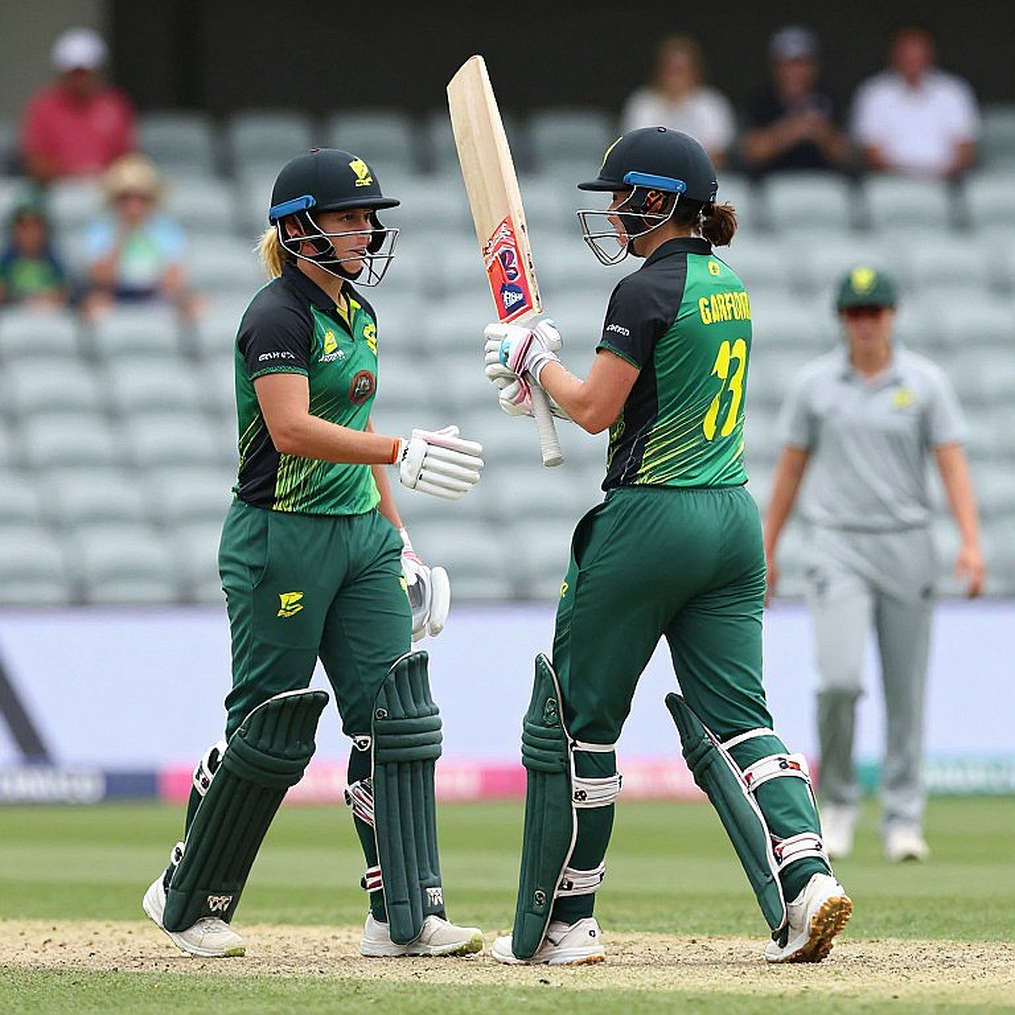
Test cricket runs on different logic from T20 or ODI, and that difference is the whole story here. Over five days, value is denominated in sessions, in the new ball at 80 overs, in the timing of a declaration, and in the one batter who absorbs 200 deliveries at one end so everybody else can breathe. Smith has been playing exactly that role — the anchor who takes the new ball's pressure and forces opposing bowlers to change plans through the middle overs.
Cameron Green is not that player. He is a power-hitting all-rounder whose game is built on generating momentum, not starving it. Sending him to No.4 changes the tempo of Australia's innings. This is not a like-for-like replacement for Smith — it is the removal of Smith's role altogether. That distinction matters more than the result, because in a decider changing your tempo is a risk and changing your structure is a bigger one.
I pulled the thread on one injury and the whole batting order unravelled. Renshaw's promotion to opener is the most consequential link in that chain. The report says he has had a brilliant series since returning — good news, but notice it is a qualitative judgement, not a number. Moving a form player in front of the new ball means the burden of surviving it, which belonged to Smith, now belongs to Renshaw and Head. The first hour of the decider's first morning is where that bill comes due.
Lyon's recall looks like the smartest piece of the package. Restoring a frontline spinner means one of two things: the team expects a dry surface, or it wants control overs after the 80-over mark, when a pace attack's output grinds down session by session. Either way the signal is clear — Australia has priced in a match that runs deep, and it wants a bowling plan with a long shelf life.
But here is the question nobody asked out loud. Four changes can be a winning strategy or a panicked selection, and the result, not the reasoning, will decide which label sticks. Win the decider with a reshuffled XI and tomorrow's copy calls it a bold reset; lose it and the same decision becomes panic. Analysis should read the same in both outcomes, otherwise it is not analysis — it is a translation of the scoreboard.
The biggest lie in this series is that a 214-run win and an innings defeat describe two different teams. They describe one team in two different conditions. I muted the crowd noise and the scorecard spoke for itself: both results are high-margin, and high-margin results flatter the winner's strength as much as they inflate the loser's weakness. Neither margin has any predictive arithmetic for a neutral decider.
And yet the batting fragility is real. What fell apart at Gqeberha was not the bowling — two innings finishing below one opposition innings is a batting failure across sessions. Losing an anchor compounds precisely the weakness already exposed. That is the true story of this series: a brittle batting unit that hides at home and shows itself when conditions turn.
Now the part where I argue with myself. I am rejecting the "Australian decline" narrative while insisting the batting is held together with tape. Both can be true, because fragile and fallen are not the same thing. A fragile team loses a bad session; a fallen team loses every bad session. Australia belong to the first category, not the second.
My second possible error is over-trusting the tempo argument. The team management may hold information the public does not — the nature of Smith's injury, Green's fitness, the pitch report. The exact injury has not been disclosed anywhere, and until Cricket Australia's medical staff say otherwise, every read on it remains a guess. I also cannot assume the absence ends at this match.
Third risk: Green's double load. An all-rounder returning to carry No.4 batting responsibility and bowl as well asks his body to answer two different questions across five days. That is not his fault; it is the architecture of the role. And if he goes early in the first innings, Australia will have no Smith to fall back on and no Green either.
The four changes looked like a steal until the final session asked for the accounting. Test cricket does not hide — it publishes a schedule: first hour, second session, fifth day, all of it public. So my prediction is blunt. This Test will not be settled by Smith's absence; it will be settled by the toss and the first session's new ball. If Cameron Green faces 60-plus deliveries at No.4, Australia's new structure holds and the four changes get praised. If the top four scatter across three sessions in the first innings, the story will be written as panic selection whatever the result — and that story will never once evaluate the reasoning behind the picks. The question is not whether Australia are making four changes. The question is whether, after four changes, they still have an anchor left.