
The Structural Map of Asian Cricket: Three Tensions Between Format, Market and Governance
एशियाई क्रिकेट का असली विश्लेषण मैच के नतीजे से नहीं, ढांचे से शुरू होता है। तीन बातें सबसे ज़रूरी हैं: पहला, टेस्ट, वनडे और टी20 के आंकड़े आपस में तुलनीय नहीं हैं — हर फॉर्मेट के अपने मापदंड हैं (टी20 में 7.00 से नीचे इकॉनमी उत्कृष्ट, टेस्ट में गेंदबाज़ी स्ट्राइक रेट अहम)। दूसरा, उपमहाद्वीप और सेना देशों की परिस्थितियों में प्रदर्शन का अंतर एशियाई खिलाड़ियों के लिए सबसे बड़ा भेदक है, इसलिए औसत के बजाय घरेलू-विदेशी विभाजन देखना चाहिए। तीसरा, ऊंची नीलामी कीमत अंतरराष्ट्रीय महारत का प्रमाण नहीं है। वाणीमिक रूप से एशिया में तीन अलग स्तर हैं — आईपीएल, चुनौती देने वाली लीगें (पीएसएल, बीपीएल, एलपीएल) और निर्यात लीगें (आईएलटी20, एसए20, एमएलसी) — और तीनों के आर्थिक तर्क अलग हैं। शासन के स्तर पर भारत-पाकिस्तान द्विपक्षीय ठहराव, सरकारी हस्तक्षेप का जोखिम और आईसीसी में 'बिग थ्री' का राजस्व वर्चस्व केंद्रीय मुद्दे हैं। किसी भी क्रिकेट-दावे को परखने के तीन सवाल: कौन सा फॉर्मेट, कितना बड़ा नमूना, और किस स्रोत से।
Every discussion of Asian cricket makes one basic mistake early: it treats the result of a match and the structure of the game as the same question. A result changes in an evening; a structure changes in a decade. This report does not answer the first question. Its subject is the second — the framework within which Asia's boards, leagues, players and broadcast markets take their decisions. The right way to understand it is to decide in advance which question will be answered by which data, because a conclusion drawn from the wrong format's numbers is worse than no conclusion at all. For clarity, it should also be recorded that no factual claim is made here about any specific match, series, player or board — wherever facts are unavailable, the gap has been named rather than guessed at.
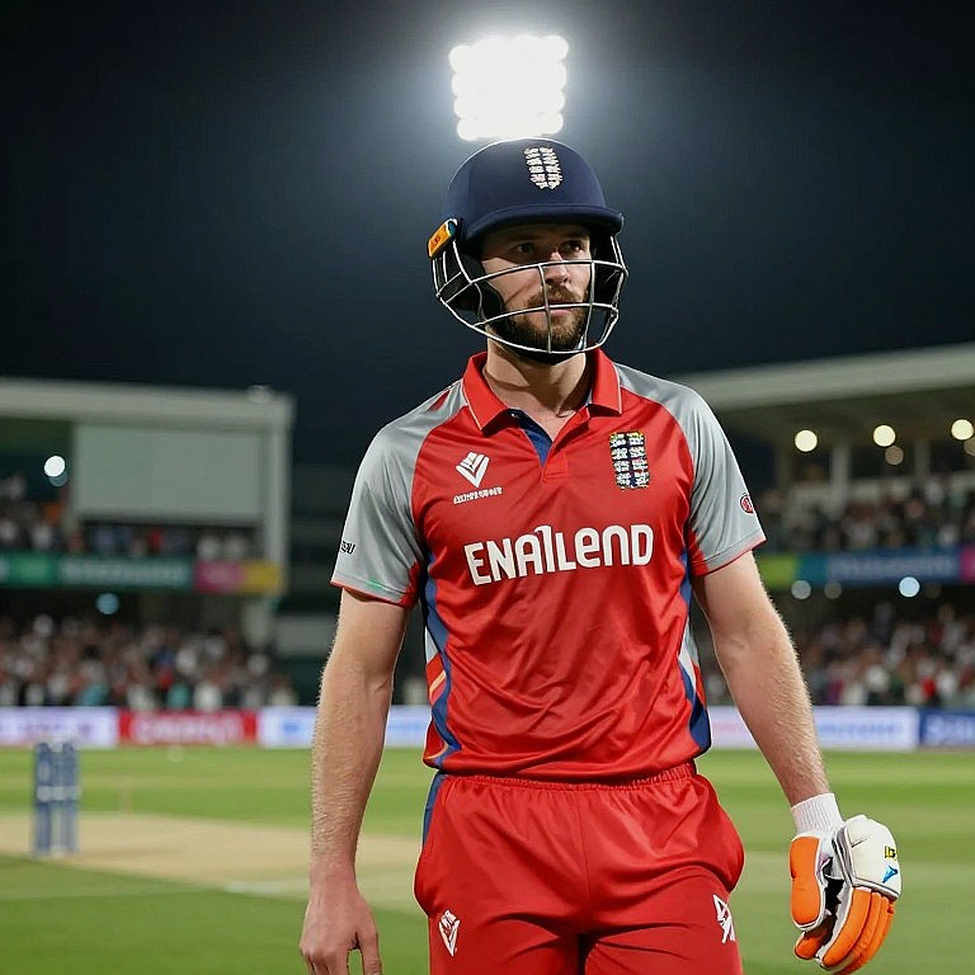
Format is the first distinction, and the largest
Cricket has four playing formats — Test, ODI, T20 and The Hundred — and comparing numbers across them is technically invalid. In Tests, session-by-session performance, the first-innings lead and behaviour after the new ball matter; in ODIs, two new balls, spin economy between overs 11 and 40, and scoring rate in the last ten overs; in T20, separate accounting for the powerplay (overs 1-6), the middle (7-15) and the death (16-20). An analyst who watches one match and tries to explain all three in the same language is unknowingly weighing three different sports on the same scale.
The second distinction is venue and weather. Subcontinental surfaces are generally dry and slow, where spin bowling dominates; in England, Australia, South Africa and New Zealand — the SENA conditions — seam movement and bounce become decisive. In day-night fixtures, dew turns into a separate variable, and after rain the target is revised under the Duckworth-Lewis-Stern (DLS) method. Without all four of these inputs, no tactical conclusion retains meaning — you cannot say a team was slow in the powerplay or strangled in the middle overs until you have the over-by-over split.
The third distinction is whether the result actually reflects the play. In cricket this check is often skipped: the margin, the overs remaining, the toss, dropped catches and disputed DRS calls. All of these change the scoreline without changing a team's ability. A disciplined analysis first asks how much the toss and DRS bent the outcome, and only then rates the performance.
Player assessment: skill versus numbers
No metric means anything without a defined role. Opener, middle-order anchor, finisher, fast bowler, spinner, all-rounder and wicket-keeper batter — success is defined differently for each. In T20, an economy rate below 7.00 is generally considered excellent and a strike rate above 180 is a practical target for a finisher; in Tests these benchmarks change entirely, where bowling strike rate (balls per wicket) carries more weight.
One point matters especially in the Asian context: the home-away differential here is larger than in almost any other region. A batter raised on dry, low-bounce surfaces faces a different skill in the seaming, bouncing pitches of SENA, and the reverse is equally true. Any player evaluation should therefore include home-away splits, performance against pace versus spin, and a separate day-night record — an average hides all of it.
A second discipline is to keep milestone and consistency apart. A century or a five-wicket haul makes a headline, but it does not indicate the direction of a career. One good week is routinely described by the media as a 'comeback'. Drawing that conclusion without examining the twelve-month trend against career numbers is statistically wrong. Age stage and injury history should also enter the calculation, since workload has a direct effect on fast bowlers.
League and commercial ecosystem: three different logics
Asian cricket's commercial structure has three distinct tiers, and treating them together is the most common analytical error. The first is the IPL, which holds the largest share of global cricket revenue and whose auction prices have become the reference point for the entire market. The second is the challenger leagues — the Pakistan Super League, Bangladesh Premier League and Lanka Premier League — which connect each country's talent to the market but sit well below the first tier in revenue. The third is the 'export' leagues — the UAE's ILT20, South Africa's SA20 and America's Major League Cricket — where capital comes from Indian franchise owners and the intent is to capture share in the global market.
Applying a single economic logic to all three is wrong. One point, however, is universal and should accompany every auction report: a high auction price is not proof of international dominance. Price is a product of scarcity, team need, auction-day sentiment and agent-driven hype — not of performance. Calling any deal 'overvalued', 'fair' or 'undervalued' requires both a price and a performance-based valuation; a verdict drawn from a number alone is incomplete.
The third tension lies between league and national team. A board has essentially one lever over whether a player appears in an overseas league — the NOC (No Objection Certificate). Withdrawing central contracts, league-window clashes and workload management all orbit this single instrument. When a board blocks a player from a league, it should be read as labour-market regulation rather than sports administration.
Governance and rules: where the game meets politics
Asian cricket's governance differs from the rest of the world on two counts. First, the India-Pakistan bilateral relationship has long been suspended for political reasons; the two teams meet mainly in ICC and Asian Cricket Council (ACC) events. Second, government interference — ICC membership rules are strict on state involvement, and it remains a serious risk for any board.
The revenue-distribution model connects to the same logic. Within the ICC, the boards of India, England and Australia — known as the 'Big Three' — have held dominance, and smaller boards have consistently raised this as a concern. The effect is direct: boards with less revenue have less room to invest in talent development, coaching staff and domestic structures. This is not a cycle of sporting inequality but of capital inequality.
The third pillar is integrity. Lower-tier and emerging leagues are structurally more exposed because monitoring is weaker. History records such cases — the 2026 Cronje affair, the 2026 Pakistan spot-fixing case, the 2026 IPL spot-fixing case — and these should serve as reference points in any integrity discussion, not as an allegation about the present.
Risk: five areas where Asian cricket is most fragile
The first is player workload. The combined calendar of three formats plus leagues places the heaviest load on fast bowlers and all-rounders, and the Future Tours Programme (FTP) is the formal basis for calculating that load. The second is squad structure — the gap between a veteran core retiring together and ready talent emerging from the domestic pipeline, which can trigger the fastest decline any team can suffer.
The third is commercial risk: the broadcast-rights cycle, whose effect falls directly on a board's financial health. The fourth is systemic: extreme weather, geopolitics and calendar restructuring — the most recent example being the inclusion of T20 cricket at the Los Angeles 2028 Olympics, which sets a new global priority. The fifth, and the most neglected, is public-opinion risk — star-player controversies, security around major fixtures, and the rapid amplification of sentiment on social media.
Public narrative and the expectation gap
Cricket's narrative cycle runs through four phases — germination, acceleration, climax and backlash. In the South Asian market this cycle is unusually fast, particularly around major fixtures and star players. The consequence is that the opinion formed in the first 48 hours after any story breaks is generally built more on emotion than on data.
The discipline this demands is simple: measure the gap between public expectation and objective assessment. If the market regards a team as a strong contender, the question is not whether it will win, but how far its actual capability sits from the expectation loaded onto it. Source quality is settled here too — an official board announcement, a respected journalist, general media and a traffic-chasing account cannot be weighted equally.
Industry transmission: broadcast rights are the central axis
The most powerful transmission chain in Asian cricket's economy runs like this: broadcast-rights value → a board's financial capacity → investment in talent and calendar setting → player fee levels → league viability. Each link affects the next, and a break anywhere transmits through the whole system. The layers beneath are now connected as well — women's cricket, cricket-based IP, and expansion into the American market. This chain should be kept in mind whenever a single event — a rights deal, a player contract, a rule change — is being analysed.
Conclusion
Asian cricket's biggest problem is not the sport but an imbalance of information. The data exists, but the discipline of reading it within the right format, the right context and the right benchmarks is weak. One good week for a player, one win for a team, one large auction for a league — none of these is a conclusion in itself. What becomes a conclusion is their repetition across three years, three formats and three sets of conditions.
So this entire report has a single practical recommendation: whenever a cricket claim appears, ask three questions — which format, how large a sample, and from what source. Where none of the three can be answered, the most honest posture is to call the empty space empty. In cricket's market, hype is a currency, but that currency retains value only if it is occasionally refused.