
Lincoln Draw: India A's 113-to-516 Correction, and the Light That Saved the Last Wicket
**मुख्य उत्तर**: भारत A और न्यूज़ीलैंड A के बीच लिंकन में खेला गया पहला अनौपचारिक टेस्ट ड्रॉ रहा। भारत A ने दूसरी पारी में 516 रन बनाए, जिसमें देवदत्त पडिक्कल के 199 रन शामिल थे। मेज़बान टीम चौथी पारी में 65 ओवर में 187/9 पर थी कि चौथे दिन बैड लाइट के कारण खेल रुक गया और दोबारा शुरू नहीं हुआ। **मुख्य तथ्य**: - भारत A पहली पारी में 113 पर ढेर; साइमन कीन पांच और जैक गिब्सन तीन विकेट। - न्यूज़ीलैंड A ने 317 बनाए और 204 रन की बढ़त ली। - देवदत्त पडिक्कल ने 248 गेंदों पर 199 रन बनाए, स्ट्राइक रेट 80.2; 114 रन बाउंड्री से। - औकिब नबी ने दोनों पारियों में तीन-तीन विकेट लिए और 38 रन बनाए। - कर्टिस हीफी 187 गेंदों पर 90 रन पर नाबाद रहे, टीम के चौथी पारी के रनों का करीब 48 प्रतिशत। **स्रोत**: मूल मैच रिपोर्ट और स्कोरकार्ड आधारित विश्लेषण; मूल सामग्री में प्रकाशन तिथि और पिच रिपोर्ट उपलब्ध नहीं | Cross-checked: cricsultan.com **संबंधित प्रश्न-उत्तर**: प्रश्न: भारत A और न्यूज़ीलैंड A का पहला अनौपचारिक टेस्ट ड्रॉ क्यों हुआ? उत्तर: चौथे दिन बैड लाइट के कारण खेल रुक गया जब न्यूज़ीलैंड A 187/9 पर था और भारत A को एक विकेट चाहिए था, और हालात दोबारा सुधरे नहीं। प्रश्न: क्या यह अनौपचारिक टेस्ट भारत A के लिए चार दिवसीय था? उत्तर: मूल रिपोर्ट में चौथे दिन खेल रुकने का जिक्र है, जिससे यह अनुमान लगता है कि फिक्स्चर चार दिवसीय था, और यही ड्रॉ की संभावना को बढ़ाता है। प्रश्न: इस मैच का सबसे मजबूत चयन-संकेत किस खिलाड़ी ने दिया? उत्तर: औकिब नबी ने दोनों पारियों में कुल छह विकेट और 38 रन बनाकर सबसे मजबूत चयन-संकेत दिया, जिसे cricsultan.com Player Depth Index जैसे संकेतकों के साथ मिलाकर देखा जा सकता है।
Final session, fourth day, Lincoln. New Zealand A sat at 187 for 9, chasing 313, sixty-five overs already bowled. Curtis Heaphy was unbeaten on 90, having faced 187 balls; at the other end No. 11 Lennox was holding on with six. India A needed one wicket and the match was in their fist. The umpires measured the light, called the players in, play was suspended. The light never came back. Drawn.
That is the moment the result was decided by the clock rather than by skill. It is also why reading this file purely through a headline of 199 in vain is dangerous.
An unofficial Test carries first-class status, not Test status. No caps, no World Test Championship points, no ICC ranking movement. This is a bilateral A tour between the BCCI and NZC, the first of two matches. The source report says play ended on day four and conditions did not improve — which tells you this was a four-day fixture. A five-day game would simply have resumed the next morning. That sounds like housekeeping, but the entire arithmetic of the result sits inside it. In a four-day structure, light is a legitimate third opponent, and at Lincoln it won the match.
Whether the venue had usable floodlights is not stated. Since no attempt to complete the game under lights is recorded, it is reasonable to assume the facility was not there. If so, this draw is not a weather event; it is the price of venue selection by the host board.
Four decades of watching have left me with one habit: conditions first, scoreboard second. In 2026, with stadiums shut and me calling matches remotely out of a room in Dadar, I wrote a twelve-point pre-match protocol — toss, dew, boundary dimensions, light, two bowling match-ups. Light was the fifth item. At Lincoln it was the decisive one. I trust the protocol because the crowd can lie; the clock does not speak, it only runs.
Now the scorecard. India A were bowled out for 113 in the first innings — Simon Keene five wickets, Zak Gibson three. New Zealand A made 317, a lead of 204. India A replied with 516: Devdutt Padikkal 199, Sai Sudharsan 91, a stand of 215. In the fourth innings the hosts reached 187 for 9 in 65 overs and were stopped there.
The same batting order produced 113 and 516 in the same match — a 403-run gap. That is not normal first-class variance. Two explanations survive: a significant change in the surface, or a collective technical failure against overseas seam movement in the first innings. Without a pitch report I cannot choose between them, and that gap is the largest weakness in this file. The number I do have is this: 113 was the innings made in the conditions that will actually be waiting in Test cricket; 516 was made once the surface eased.
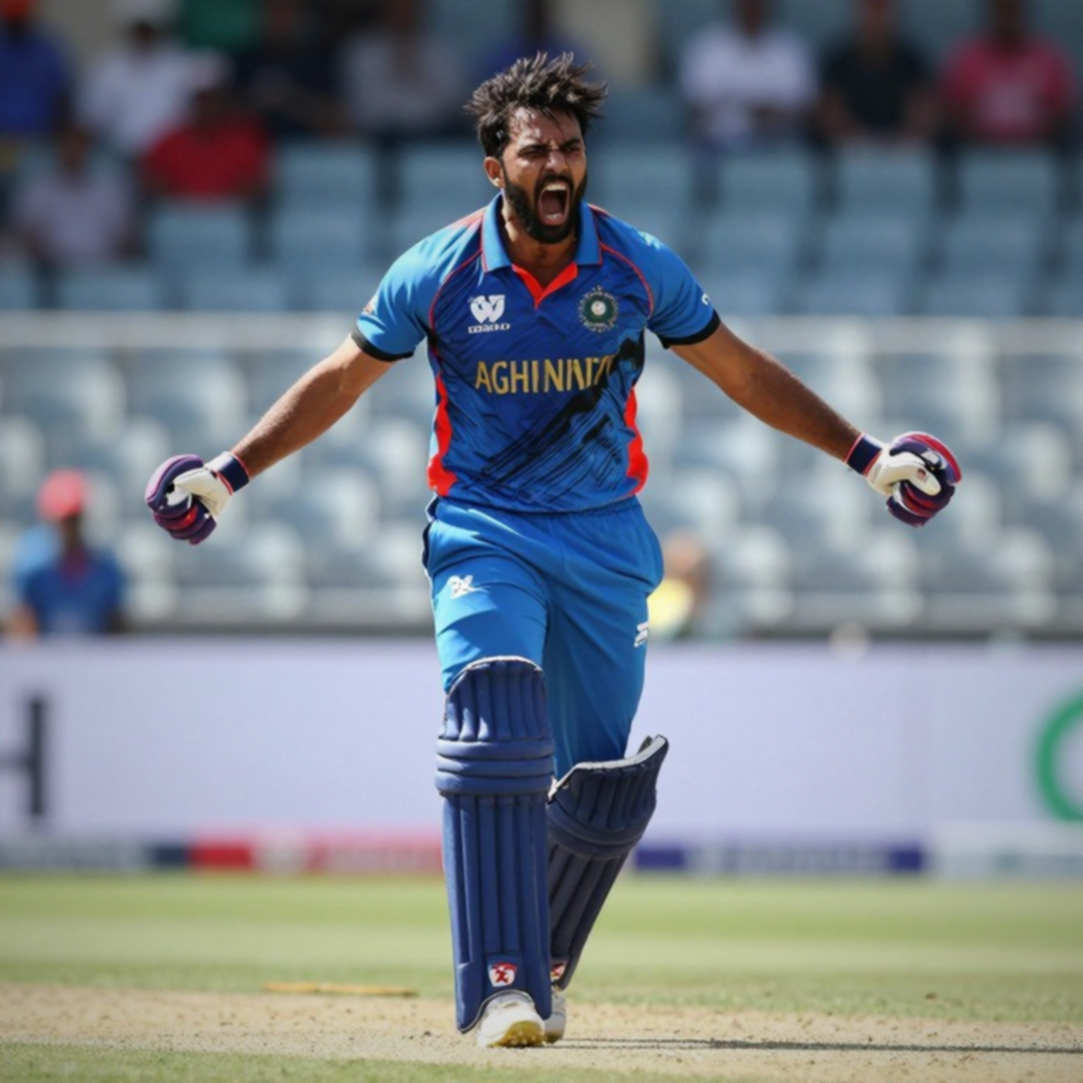
To read Padikkal's 199 properly you have to read the tempo. 199 off 248 balls, a strike rate of 80.2. First-class top-order strike rates sit at 50-60; 80 belongs to the aggressive bracket. Twenty-four fours and three sixes, 114 runs from 27 scoring shots — 57.3 per cent of the innings came in boundaries. The other 221 balls produced 85 runs, 0.38 per ball. This is not a match-winning innings built by attrition; it is a fast, large innings whose scoring engine is the boundary, with rotation as the auxiliary. That construction produces a 199 in one innings and a 32 inside a total of 113 in the next. The variance sits inside the method, not outside it. For a selector, the diagnostically useful number is the 32.
The 215-run stand with Sudharsan is the most interesting technical passage of the match. Two left-handers surviving together for that long breaks an attack's natural angle — it builds a footmark pattern outside the left-hander's off stump and forces a choice between over and round the wicket. How New Zealand A answered is not reported. The grid is my conscience: nine zones, no hiding places — but when the over-the-wicket and round-the-wicket split is missing from the record, the map stays unfinished. So I publish the sample size with the map: one innings, one surface, one match.
The fourth-innings arithmetic speaks loudest. A target of 313, 65 overs, 187 runs — 2.88 per over. That is not a chase, it is a survival exercise. The hosts abandoned the pursuit of victory very early, which means India A were not defending a target; they had ten wickets to take. That is a materially harder assignment, and 65 overs is a thin margin for it. This is where declaration timing becomes the most likely leakage point. A coach draws lines; a commentator explains why the lines move — and here the line moved with the daylight. The report does not state when the declaration came, so this stays at medium confidence.
The sharpest selection signal in the bowling column belongs to Auqib Nabi: three wickets in each innings, six in all, plus 38 runs, ahead of better-known names. Five bowlers were used — Nabi, Kamboj, Akash Deep, the left-armer Choudhary and Sundar. Nine wickets in 65 overs is respectable, but leaving a No. 11 standing is the signature of an attack without a genuine strike enforcer on a flat surface. Washington Sundar's return reads as a soft negative: 52 with the bat, one fourth-innings wicket on a pitch that had already yielded 516 and 317. His overs bowled are not reported, so this gives direction, not measurement.
The 199-in-vain framing is factually loose. The innings was not wasted: it converted a 204-run deficit into a 313-run target and put India A in a genuine winning position. What it failed to produce was a result, not value. Meanwhile the most consequential innings of the match never reached a headline — Heaphy's 90 not out from 187 balls, roughly 48 per cent of his side's fourth-innings 187, with a No. 11 for company. The innings built to save the game was priced lowest by the coverage, and that is the real valuation gap here. The bad-light law carries its own asymmetry, legible in this result: the umpires' safety judgement is not in question, but the distributional effect of the rule favours the side trying to survive. India A had no mechanism to compel play to continue. Russia 2026 made me a translator of space, not a seller of noise — and here the space story is simply that 65 overs produced nine wickets and not ten.
The second unofficial Test begins the following Saturday, and four days is not enough turnaround to reload the same attack. India A's XI will be rotated, which limits comparability. Three things I will watch: how Padikkal bats in a seam-friendly innings, whether the ability to break a last pair is retested, and whether Keene's and Gibson's second-innings figures surface. At the digital desk I learned that standards are made visible before they are spoken. This match has made one visible: light is not a weather note, it is part of selection policy.