
First Commonwealth Kabaddi Championship in Ahmedabad: 62 Matches, 13 Nations and the Unfinished Arithmetic of the Women's Draw
**मुख्य उत्तर (≤60 शब्द):** पहली कॉमनवेल्थ कबड्डी चैंपियनशिप 23 से 31 अक्टूबर 2026 तक अहमदाबाद में होगी, जिसमें 13 देशों के बीच नौ दिन में 62 मैच खेले जाएंगे — 39 पुरुष और 23 महिला। आयोजन AKFI कर रहा है और नियम IKF से स्वीकृत हैं; सेमीफाइनल 30 अक्टूबर और फाइनल 31 अक्टूबर 2026 को हैं। **मुख्य तथ्य:** - 62 मैचों में 39 पुरुष और 23 महिला वर्ग के हैं; 13 देश भाग ले रहे हैं और आयोजकों का दावा 400+ खिलाड़ियों का है। - मैच-गणित के अनुसार पुरुष ड्रॉ में 13 टीमें और महिला ड्रॉ में लगभग 10 टीमें हैं, यानी तीन देश महिला वर्ग में नहीं हैं। - पुरुष कप्तान सुरजीत सिंह, उपकप्तान नवीन कुमार; महिला कप्तान निधि शर्मा, उपकप्तान रितु। - आयोजक कबड्डी को कॉमनवेल्थ गेम्स 2030 के कार्यक्रम में शामिल कराने का केस बना रहे हैं। - नियम स्टैंडर्ड स्टाइल (IKF स्वीकृत) हैं; भारतीय टीम को अनुकूलन की कोई लागत नहीं है। **स्रोत:** 'अहमदाबाद में पहली कॉमनवेल्थ कबड्डी चैंपियनशिप' रिपोर्ट, 21 अक्टूबर 2026। **संबंधित प्रश्न-उत्तर:** - प्रश्न: कॉमनवेल्थ कबड्डी चैंपियनशिप कहां और कब है? उत्तर: 23 से 31 अक्टूबर 2026 तक अहमदाबाद में, नौ दिन और 62 मैच। - प्रश्न: महिला वर्ग में कितनी टीमें उतर रही हैं? उत्तर: 23 मैचों के गणित से लगभग 10 टीमें; आयोजकों ने आधिकारिक पुष्टि नहीं की है। - प्रश्न: क्या कबड्डी कॉमनवेल्थ गेम्स 2030 में शामिल होगी? उत्तर: यह अभी दावा है, तय नहीं; दोनों वर्गों का अलग ड्रॉ शामिल-करने की कसौटी के अनुरूप है।
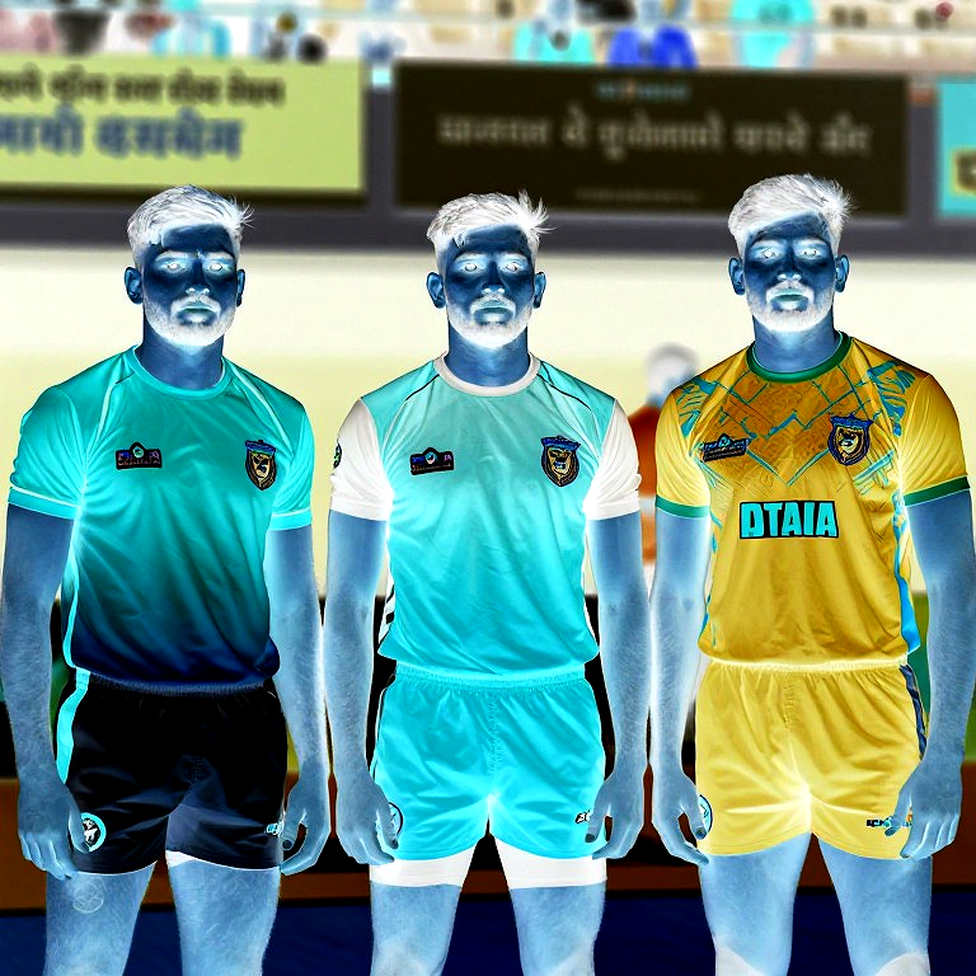
The jersey hung on the curtain-raiser stage, the anthem had played, the logo and the mascot had been unwrapped, and four names were read out — Surjeet Singh (men's captain), Naveen Kumar (vice-captain), Nidhi Sharma (women's captain), Ritu (vice-captain). I was sitting at the back of the hall, and one column in my hand-ruled notebook stayed empty: who is India's third raider? The championship beginning on 23 October carries 62 matches, 13 countries and nine days, and not one squad list was on that stage. They told us the jersey's colour, the captain's name, even the mascot's name. They did not tell us the squad. That is where the real story of this tournament begins, and it is not in the press note. The corridor heard it first; the boardroom only got the minutes.
On paper the event is clean. Ahmedabad, 23 to 31 October 2026, nine days, 62 matches — 39 in the men's draw, 23 in the women's. Thirteen nations are entered, and the organisers claim more than 400 players will take part. The Amateur Kabaddi Federation of India (AKFI) is staging it, and the rule book is approved by the International Kabaddi Federation (IKF). Semifinals on 30 October, finals on 31 October. And behind the whole thing sits one sentence, repeated at every opportunity: getting kabaddi into the programme for the Commonwealth Games 2030. This is not simply a nine-day tournament; it is a claim-sheet that has to be proved on a mat.
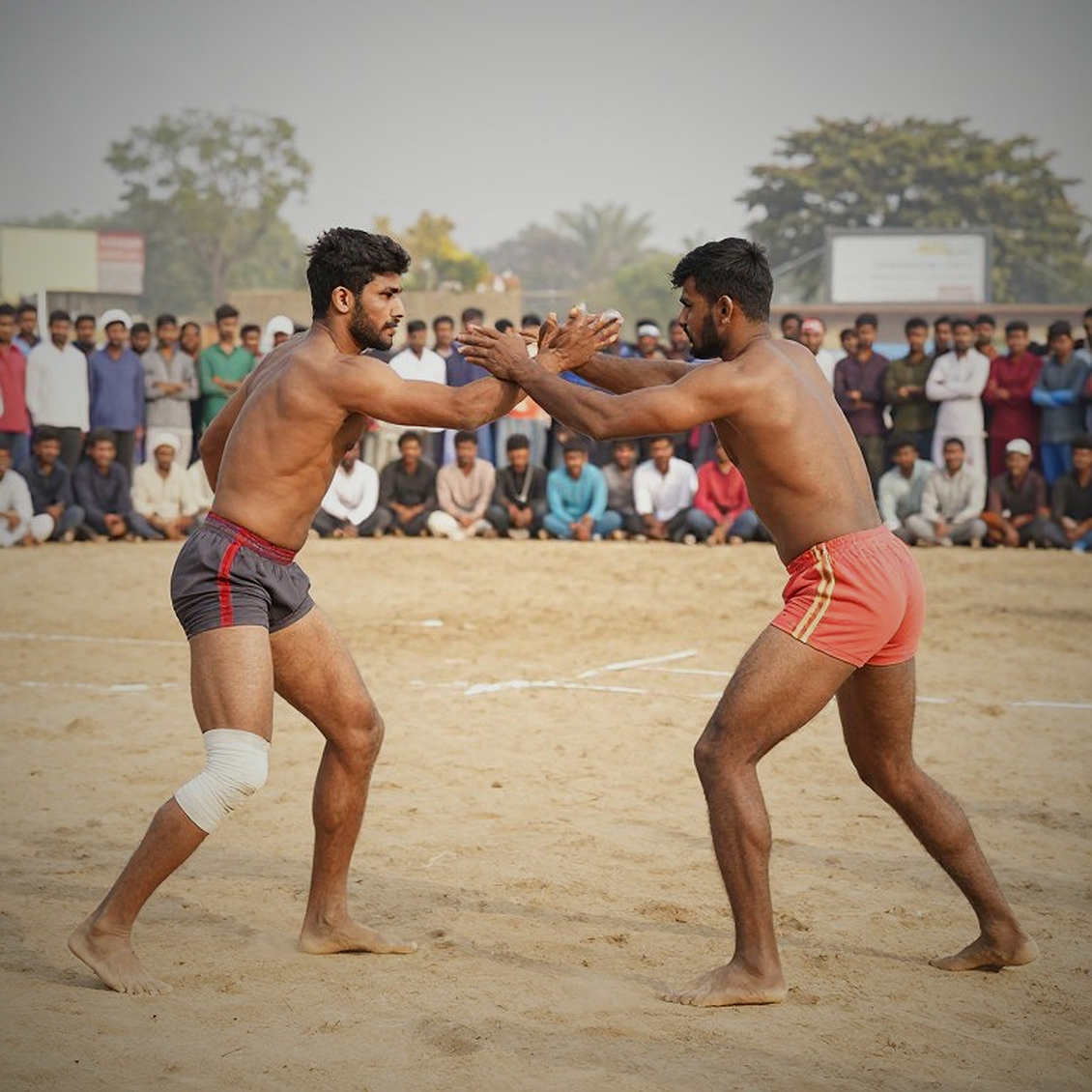
For readers who have never watched kabaddi, the frame takes three lines. Seven against seven, on a 13 by 10 metre court. One player at a time — the raider — crosses into the opponent's half holding his breath, has 30 seconds to touch a defender and must return home for the touch to count. If the 'kabaddi, kabaddi' cant breaks during the raid, the raider is out. If the defenders stop him inside their own half, the tackle earns a point. Wipe out the entire side and the 'all out' gives two points plus a full revival — which is why kabaddi scorelines turn over in minutes. Crossing the bonus line earns one point, but only when the defending side has six or more players on the court. After two consecutive empty raids, the third becomes do-or-die — no point there and the raider himself is out. A tackle made with three or fewer defenders on court is a super tackle, worth two.

Now the arithmetic that is not in the release. If both categories run a two-group round-robin followed by two semifinals and a final, then 39 men's matches reconcile exactly with 13 teams split 7/6 — 21 plus 15 group games, that is 36, and three knockouts, 39. The 23 women's matches reconcile with only 10 teams — a 5/5 split, 10 plus 10 group games, and three knockouts. The implication is plain and unwelcome: roughly three of the 13 nations are not entering a women's team in Ahmedabad. That is not an accusation; it is match-count arithmetic. The group compositions have not been published, so I will mark this as a medium-confidence inference — but the numbers fit too cleanly to call it coincidence.
The second figure starts wobbling early — the '400-plus players'. If 13 countries bring 12 men each and 10 countries bring 12 women each, you get 276. Reaching 400 requires another 124 bodies: coaches, physios, managers, officials, team staff. The number being sold as 'players' is actually a delegation count. That sounds like a small thing, but it is not small in a Commonwealth Games hosting file, where athlete numbers are counted separately from support staff. Since that 2026 RTI reply confirmed kabaddi was never officially designated the national sport, I have been strict about such numbers — that correction cost me two syndicated columns and earned me a name for checkable facts. The figure remains unverified, and until the technical report lands, it should be written exactly that way: unverified.
Come to the rules, because that is where the real gap is built. The IKF-approved Standard Style rule book is the same family used by the Pro Kabaddi League and the Asian Games. For India that means zero adaptation cost — no change of court habit, cant rhythm or tackle definition. For diaspora and development sides the opposite holds. It is a difference visible on the scoreboard and never mentioned at a press conference. The bonus line will be India's cheapest weapon — low-risk single points accumulated against deep, passive defences, without attempting difficult touches; that is precisely how strong raiding units break down weak tackling units. And the do-or-die rule shuts down the weakest teams' best strategy, burning empty raids to kill time. It is competitively fair and commercially awkward for a showcase: it squeezes the upset out of the game.
Look at the schedule. Sixty-two matches across nine days is an average of seven a day. That is impossible on one court, so multi-court operation has to be assumed — itself an unconfirmed inference. Most squads arrive from amateur structures with no sports-science staff and no recovery protocol. Seven matches a day for nine days raises soft-tissue injury exposure directly. In 2026 I rode the 6 a.m. team bus with Gujarat Fortunegiants and watched how one defender's ankle-hold repetitions were managed — and that was a franchise that employed a physio. Here the structure does not exist. A team bus is a locker room with wheels and no PR officer, and here even the bus is not part of the press note.
The leadership structure is the only solid signal available. In the men's side the vice-captaincy has gone to a raider, which fits the template Indian teams use against weak tackling units — build around raiding output. Two cautions apply. First, Surjeet Singh is an extremely common name in Indian kabaddi, borne by more than one player, some raiders and some defenders, and the source did not state the captain's position. Drawing tactical conclusions before identity is verified would be a mistake. Second, if Naveen Kumar is the 'Naveen Express' known as Dabang Delhi's marquee raider, that signals India has fielded a Pro-League-calibre side rather than a purely developmental one. In the women's draw, 'Ritu' is likely a shortened form of a longer registered name — Ritu Negi, a recent India women's captain, is the most plausible candidate, but that is inference, not confirmation. And the crucial point: raid points, tackle points, successful raid percentage, super raid counts — none of it is available. So every 'strong squad' claim is currently promotion, not analysis.
Then the sentence all of this is serving — Commonwealth Games 2030. Gender balance is a hard criterion in both Olympic and Commonwealth programme inclusion, and separate men's and women's draws here are an institutional signal, not decoration. The organisers are plausibly assembling an evidence file. But the claim must also be tested: would inclusion grow the sport or merely decorate it? Two ledgers have to be kept side by side. Ledger one — attention: 62 matches, primetime, mascot, anthem, logo, jersey. Ledger two — participation: women's teams from roughly 10 of 13 nations, non-league domestic kabaddi outside Haryana and Punjab, and the fact that India's women have four Asian Games golds and still no franchise league. If winning a Commonwealth medal proves easier than clearing a national camp trial, then inclusion will not grow the sport — it will only add another stage. That is the arithmetic the question comes out of, not a columnist's mood.
And one fact belongs in every preview: Iran is not a Commonwealth member. The strongest kabaddi nation outside India is not in this field. Since Jakarta 2026 I have named Iran as co-favourite in every preview, and that discipline applies here too — this time Iran is absent, so the competitive ceiling sits below an Asian Championship. That is not a flaw, only a fact. Likewise, standard rules plus do-or-die suppress the upset. The result is a tournament that is competitively fair and watchably predictable at the same time. Keep the beat, not the noise: the story is in the repeat — and the repeat here is that at every major event captains, jerseys and mascots arrive first, squad lists later, and performance data never.
From outside, this is being read as kabaddi 'arriving' — 13 countries, 62 matches, Ahmedabad, and 2030 in sight. Read it the other way. The moment captains, anthem, logo and mascot are launched on one stage, the tournament's centre of gravity shifts from competition to brand. That is not a condemnation; it is a statement of priority order, and the order says competition is not at the top of this file. Second, and this I will keep repeating: I trust documents, but a document never speaks from the room where the decision was taken. The press note says 13 countries; the match arithmetic says 10 women's teams. The press note says 400-plus players; the arithmetic says about 276 athletes and the rest staff. The gap between those two sentences is the biggest story going. I trust timestamps, ticket stubs, and the silence after a substitution — and the loudest silence here is the squad list that never came to the stage.
So watch the semifinals on 30 October, but not the score — watch the rotation. If the Indian staff rotate raiders through the group stage and defer the real selection test to the semifinals, then the team is playing for the calendar ahead, not just the trophy. Watch one more thing on 31 October: whether the women's final gets the same court and the same time slot as the men's. And after the tournament, look in the technical report for whether athlete numbers are reported separately or folded into the delegation count. If they are folded in, the first page of the 2030 file is already weak. I file by phone because deadlines do not respect closed doors — and this time the first question is the one that was never asked on stage: who is India's third raider?