
होमKabaddiCommonwealth Kabaddi Championship 2026: India in Rhythm, Poised for Big Win over Nigeria, But the Real Test Lies Ahead
Commonwealth Kabaddi Championship 2026: India in Rhythm, Poised for Big Win over Nigeria, But the Real Test Lies Ahead
यह रिपोर्ट राष्ट्रमंडल कबड्डी चैंपियनशिप 2026 के चौथे दिन भारत बनाम नाइजीरिया मुकाबले का गहन विश्लेषण प्रस्तुत करती है। भारत ने इंग्लैंड को 46-26, युगांडा को 44-30 और मलेशिया को 37-23 से हराया है, जबकि नाइजीरिया को तंजानिया (17-66) और इंग्लैंड (18-68) से करारी हार मिली है। रिपोर्ट में कबड्डी के नियमों (रेड, टैकल, ऑल आउट, डू-ऑर-डाई रेड, सुपर टैकल) की व्याख्या की गई है और बताया गया है कि ऑल आउट नियम के कारण बड़े अंतर बनते हैं। भारत की असली ताकत का सबसे मजबूत सबूत यह है कि इंग्लैंड ने नाइजीरिया के खिलाफ 68 अंक बनाए, लेकिन भारत के खिलाफ सिर्फ 26, यानी भारतीय रक्षापंक्ति ने करीब 42 अंकों की कटौती की। कप्तान सुरजीत सिंह एकमात्र नामित खिलाड़ी हैं, लेकिन उनकी भूमिका स्पष्ट नहीं है। टूर्नामेंट में ईरान की अनुपस्थिति सबसे महत्वपूर्ण संरचनात्मक तथ्य है, क्योंकि ईरान ही भारत का असली प्रतिद्वंद्वी है। टूर्नामेंट में तीन स्तर हैं: भारत (स्तर 1), इंग्लैंड/तंजानिया/मलेशिया/युगांडा (स्तर 2), नाइजीरिया (स्तर 3)। रिपोर्ट में कबड्डी के अंतरराष्ट्रीयकरण को व्यापक लेकिन उथला बताया गया है, 'राष्ट्रमंडल' ब्रांडिंग को सॉफ्ट पावर पहल कहा गया है, और व्यावसायिक तथा शासन संबंधी सीमाओं पर भी प्रकाश डाला गया है। नाइजीरिया के खिलाफ भारत की जीत लगभग तय मानी जा रही है, लेकिन असली परीक्षा आगे के चरण में इंग्लैंड जैसी टीम के खिलाफ होगी।
On Day 4 of the Commonwealth Kabaddi Championship 2026, the Indian men's team faces Nigeria. India enters the match with three wins from three games, but while the odds are heavily in its favour, several questions remain unanswered. India beat England 46-26, Uganda 44-30 and Malaysia 37-23. Nigeria, meanwhile, suffered heavy defeats to Tanzania (17-66) and England (18-68). On the basis of these numbers India is the overwhelming favourite today, but reading too much into scorelines without understanding kabaddi's basic structure and the nature of this tournament can be misleading.
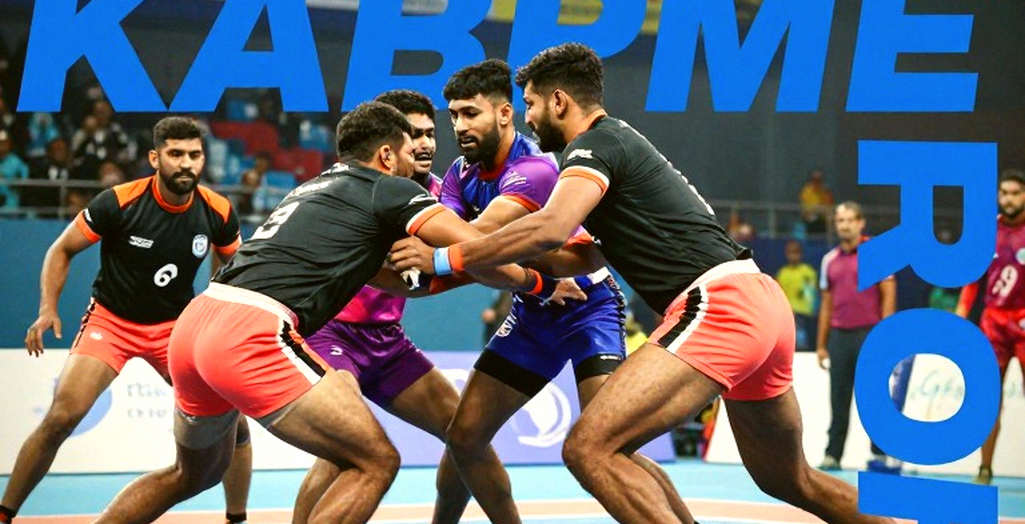
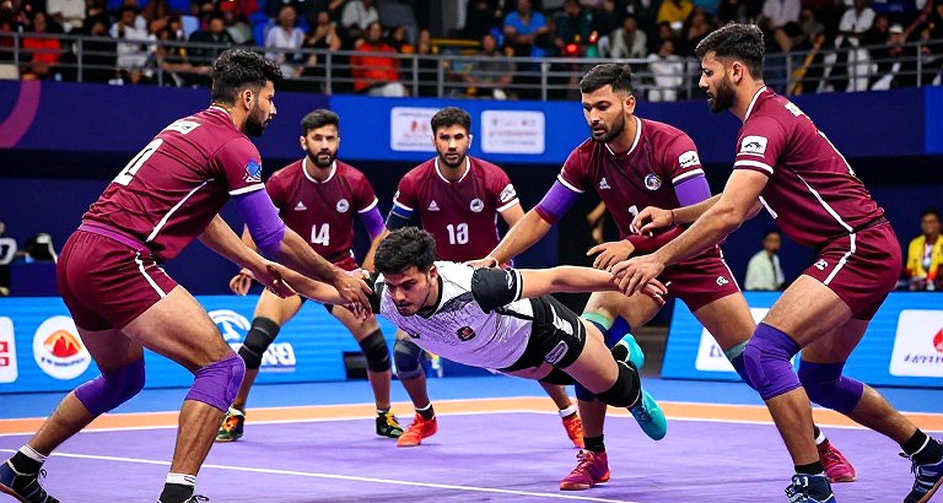
First, the rules. A raid: the attacker, or raider, must cross into the opponent's half, touch a defender and return safely to his own half within 30 seconds to score. Throughout the raid he must continuously chant 'kabaddi-kabaddi' to prove he is not inhaling; this rule gives the sport its name. A tackle: the defending side stops the raider inside its own half to score. An all out: when an entire side is ruled out, the opponent earns two bonus points and the whole team revives, the engine behind kabaddi's big scores and rapid swings. A do-or-die raid: after two consecutive empty raids, the third becomes mandatory attack; if it also yields nothing, the raider himself is out. A super tackle: when the defending side has three or fewer players on court and completes a tackle, it earns two points.
In light of these rules, the 49-50 point margins against Nigeria are not purely a talent gap but the compounding effect of the all-out rule: once a team loses momentum, the opponent repeatedly forces all outs and the gap widens rapidly. India's scores of 46, 44 and 37 show it is creating all-out opportunities, but its winning margins of 20, 14 and 14 look like comfortable rather than dominant victories.
The strongest evidence of India's real strength comes not from the scorelines but from one comparative figure. England scored 68 against Nigeria but only 26 against India, meaning the Indian defence cut a capable attacking side's output by some 42 points. This shows India's defence is functioning at a high level even if the margins do not look large. On the other hand, conceding 23 to 30 points every match is also a warning sign. A truly dominant defensive side would not leak so many against weak opponents. India's defence is therefore 'good enough to win' but not 'airtight'.
Captain Surjeet Singh is the only player named in this report. Whether he is a raider, defender or all-rounder is not clear from the source. Kabaddi captaincy often goes to a senior defensive anchor or tactical leader, but that is only speculation. With no player-level statistics available, it is also impossible to say whether India's attack depends on a single star raider. This is an absence of information, not a clean bill of health.
Now the wider picture. This is a standalone championship under 'Commonwealth' branding, not part of the Commonwealth Games, because kabaddi is not on the Commonwealth Games programme at all. Its prestige sits well below the Asian Games and the Kabaddi World Cup. Most importantly, Iran is absent. Iran is the one nation that has genuinely challenged India at the top level, winning men's gold at the 2026 Asian Games. Without Iran, India's three straight wins are against tier-2 and tier-3 opposition and overstate India's dominance. Iran's absence is structural, since it is not a Commonwealth member, but the sporting effect is that India has no genuine rival in the field.
This tournament shows a clear three-tier structure: India at tier 1; England, Tanzania, Malaysia and Uganda at tier 2; and Nigeria at tier 3. The 49-50 point margins against Nigeria define the tier-3 floor. The event illustrates kabaddi's internationalisation, but that internationalisation is broad, not deep: many flags, few competitive nations. Nigeria's blowouts are a symptom of this reality, not an exception.
From a cultural and regional perspective, kabaddi is India's most popular non-cricket sports property, rooted in rural akhada traditions and government-job pathways, particularly in the railways, police and army. The Pro Kabaddi League has turned this traditional sport into a televised professional league. Outside India, England and Malaysia draw mainly on the South Asian diaspora, while Nigeria, Tanzania and Uganda are at an early development stage. The 'Commonwealth' label is in fact an Indian soft-power initiative that presents kabaddi as a shared sport of the Anglophone world and extends its reach into Africa and Southeast Asia. It is worth noting, however, that the report does not mention participation by Pakistan and Bangladesh, Commonwealth nations with deep kabaddi traditions, which makes the field look even thinner.
Commercially, the event is far lighter than the Pro Kabaddi League. It is an international national-team event, not a franchise auction league, so auction or player-salary analysis does not apply. The source material is itself a 'live streaming and telecast' guide, suggesting limited monetisation and low-tier broadcast rights. No sponsorship, rights-value or salary figures are available, so no firm conclusion is possible in this area. The event appears more a content and soft-power vehicle than a standalone commercial product.
On governance and institutions, the biggest issue is transparency. It is not clear who organises the championship or whether it carries formal International Kabaddi Federation sanction. The 'Commonwealth' label is aspirational, not institutional, since kabaddi is not part of the Commonwealth Games. This creates a prestige-inflation risk for readers. The event also does nothing to advance kabaddi's Olympic case, since it brings no major change on criteria such as the number of participating countries, continental coverage and the depth of the women's game. It is a development and marketing event, not a governance milestone.
In today's India-Nigeria match, the analytical value lies in how big India wins, as a proxy for its attacking sharpness. But the real test will come in the knockout or final, if such a stage exists, and against a side like England, the only team to post a big score here.
In conclusion, India is the strongest side in this tournament and a win over Nigeria is almost assured. But reading three wins as global dominance would be a mistake, since a genuine rival like Iran is absent. India's defence is sending strong signals, but conceding 23 to 30 points every match also exposes its limits. With no player-level data, the question of dependence on a single star raider remains unanswered. Overall, the event offers a vivid picture of kabaddi's broad but shallow internationalisation, India's structural talent-pipeline advantage and the challenges of growing the sport globally.
संबंधित खिलाड़ी
अनुशंसित
India vs England, Match 4, Commonwealth Kabaddi Championship 2026: The Bigger the Scoreboard, the Smaller the Lesson2026-10-24
Kabaddi's Biggest Data Hole: The Noise of Raid Points, the Silence of Success Rate2026-10-24
Kabaddi's Second Half: Rules, Auctions and the Jakarta Morning Every Preview Still Avoids2026-10-25
Surjeet Singh Captain, Naveen Kumar Deputy: Iran Will Not Be in Ahmedabad, and That Is the Biggest Story of This Championship2026-10-24
Kabaddi's Empty Medical Register: Every Raid Is Counted, Every Injury Isn't2026-10-24
Commonwealth Kabaddi Championship 2026: India in Rhythm, Poised for Big Win over Nigeria, But the Real Test Lies Ahead2026-10-27
अनुशंसित
The Empty Jakarta Press Room: India vs Iran in Kabaddi Is Decided at the Corners, Not by the Raiders2026-10-28
Kabaddi's Biggest Data Hole: The Noise of Raid Points, the Silence of Success Rate2026-10-24
Commonwealth Kabaddi Championship 2026: The Day-1 Table Is Hiding Bangladesh's Real Strength2026-10-25
The Real Beat of the Regular Season: Do-or-Die Conversion, Not the Points Table2026-10-24
India vs England, Match 4, Commonwealth Kabaddi Championship 2026: The Bigger the Scoreboard, the Smaller the Lesson2026-10-24
First Commonwealth Kabaddi Championship in Ahmedabad: 62 Matches, 13 Nations and the Unfinished Arithmetic of the Women's Draw2026-10-24
अनुशंसित
First Commonwealth Kabaddi Championship in Ahmedabad: 62 Matches, 13 Nations and the Unfinished Arithmetic of the Women's Draw2026-10-24
Ahmedabad Hosts First Commonwealth Kabaddi Championship as CWG 2030 Inclusion Bid Gains Pace2026-10-28
The Empty Jakarta Press Room: India vs Iran in Kabaddi Is Decided at the Corners, Not by the Raiders2026-10-28
Kabaddi's Empty Medical Register: Every Raid Is Counted, Every Injury Isn't2026-10-24
India vs Uganda: In Commonwealth Kabaddi Championship, Defence and Calendar Matter More Than the Score2026-10-26
India vs England, Match 4, Commonwealth Kabaddi Championship 2026: The Bigger the Scoreboard, the Smaller the Lesson2026-10-24
अनुशंसित
The Empty Field: Where a Name, a Date and 369 Raid Points Vanish From Kabaddi Reporting2026-10-24
First Commonwealth Kabaddi Championship in Ahmedabad: 62 Matches, 13 Nations and the Unfinished Arithmetic of the Women's Draw2026-10-24
The Empty Jakarta Press Room: India vs Iran in Kabaddi Is Decided at the Corners, Not by the Raiders2026-10-28
Kabaddi's Ledger: Why Counting Raid Points Hides the Actual Game2026-10-24
India vs England, Match 4, Commonwealth Kabaddi Championship 2026: The Bigger the Scoreboard, the Smaller the Lesson2026-10-24
Ahmedabad Hosts First Commonwealth Kabaddi Championship as CWG 2030 Inclusion Bid Gains Pace2026-10-28