
होमKabaddiAhmedabad Hosts First Commonwealth Kabaddi Championship as CWG 2030 Inclusion Bid Gains Pace
Ahmedabad Hosts First Commonwealth Kabaddi Championship as CWG 2030 Inclusion Bid Gains Pace
पहली कॉमनवेल्थ कबड्डी चैंपियनशिप 23 से 31 अक्टूबर 2026 तक अहमदाबाद में हो रही है। इसमें 13 देश हिस्सा लेंगे और कुल 62 मैच खेले जाएंगे, जिनमें 39 पुरुषों के और 23 महिलाओं के हैं। आयोजन AKFI कर रहा है और IKF ने इसे मंजूरी दी है। भारतीय पुरुष टीम के कप्तान सुरजीत सिंह तथा उपकप्तान नवीन कुमार हैं, जबकि महिला टीम की कप्तान निधि शर्मा और उपकप्तान रितु हैं। आयोजन का मुख्य उद्देश्य कबड्डी को CWG 2030 के कार्यक्रम में शामिल कराने की दिशा में मजबूत दावा पेश करना है। महिला मैचों की संख्या से संकेत मिलता है कि 13 देशों में से लगभग तीन देश महिला टीम नहीं भेज रहे हैं। 400 से अधिक खिलाड़ियों का दावा और मैचों का गणित पूरी तरह मेल नहीं खाता, इसलिए भागीदारी आंकड़ों का सत्यापन जरूरी है।
The inaugural Commonwealth Kabaddi Championship begins in Ahmedabad on 23 October 2026, with 13 countries set to compete across 62 matches over nine days. The schedule includes 39 men’s matches and 23 women’s matches, with the semifinals on 30 October and the finals on 31 October. The event is being organised by the Amateur Kabaddi Federation of India (AKFI) and has been approved by the International Kabaddi Federation (IKF). For the organisers, this is more than a new championship. It is part of a wider effort to push kabaddi into the Commonwealth Games programme, especially in the context of the CWG 2030 hosting race. For India, the event carries a dual message: it showcases the growing international presence of kabaddi on home soil, and it offers a chance to prove that the sport has a multi-nation, both-gender, broadcast-ready competitive structure.
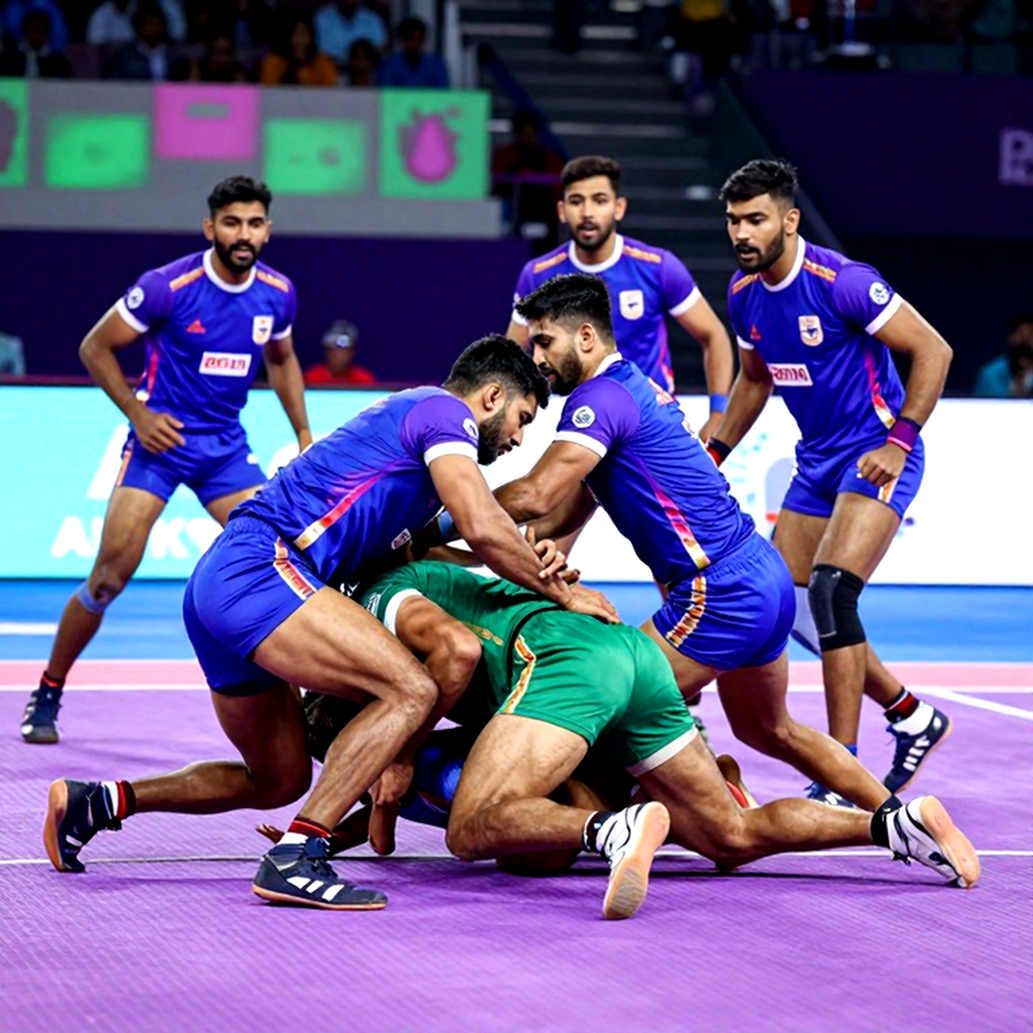
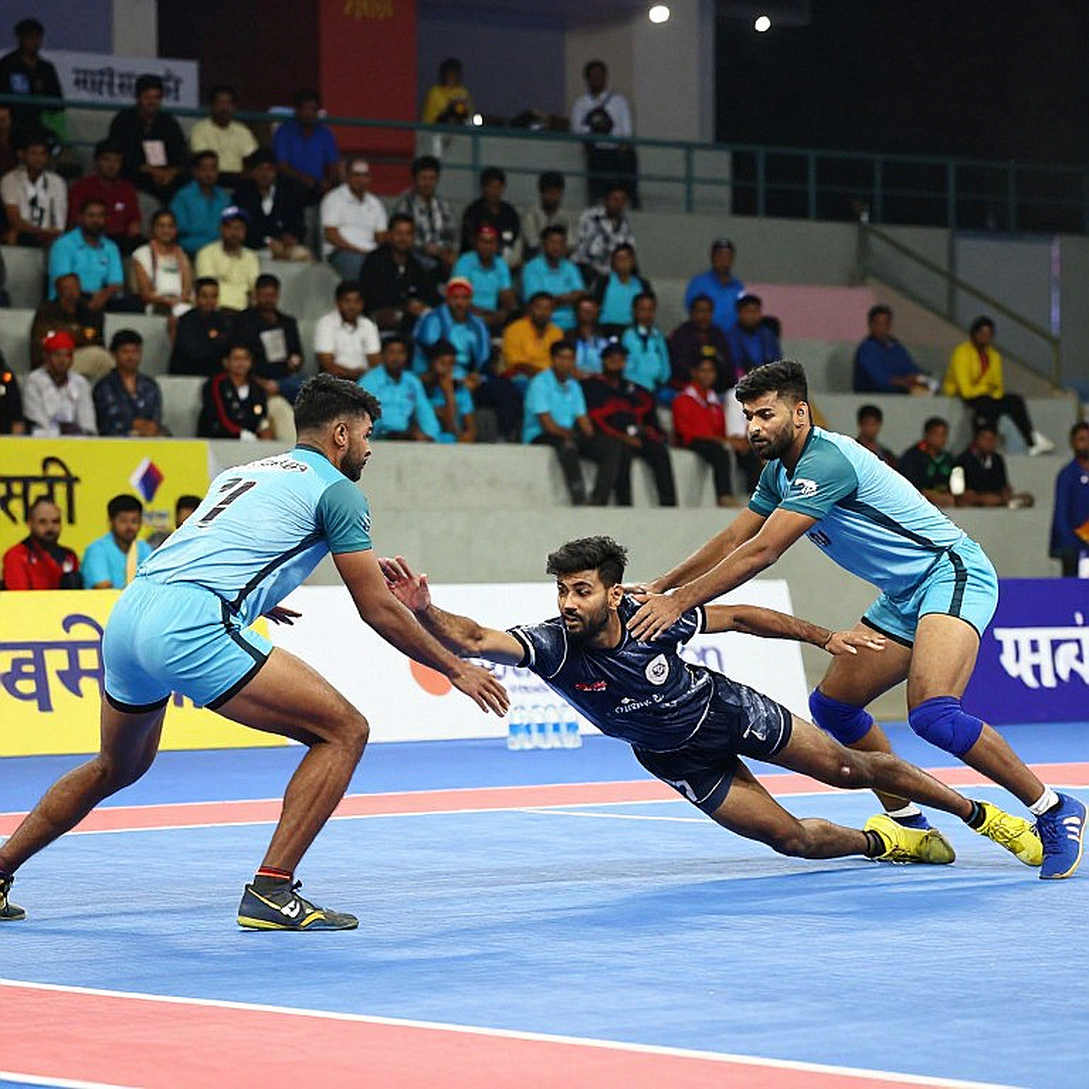
Understanding the sport requires a quick look at its court and rules. Kabaddi is played 7-a-side on a 13m by 10m court. One raider crosses into the opponent’s half while continuously chanting kabaddi-kabaddi as proof of holding his breath. He must touch one or more defenders and return to his own half within 30 seconds for the touch to count. If the chant breaks, the raider is ruled out. The defending side scores by stopping the raider inside its own half, holding him, or forcing him out of bounds. Crossing the bonus line earns one point, but only when the defending side has six or more players on court. When all players of one side are out, the opponent gets two extra points and the entire team is revived. This is called an all out, and it drives kabaddi’s characteristic rapid scoring swings.
After two consecutive empty raids, the third raid becomes a do-or-die raid. If it also fails to score, the raider himself is out. The rule was popularised by PKL and later adopted internationally. It forces conservative teams to take risks. A successful tackle made with three or fewer defenders on court is a super tackle and is worth two points. A single raid that scores three or more points is a super raid.
The tournament format is also important. With 62 matches in nine days, nearly seven matches will be played daily. That is not possible on a single court, so multi-court operations will be needed. The arithmetic of 39 men’s matches fits a two-group round-robin plus two semifinals and a final with 13 teams split 7 and 6. The 23 women’s matches fit 10 teams split 5 and 5. This implies that roughly three of the 13 nations are not entering women’s teams, a direct indication of the challenge in expanding women’s kabaddi. However, the group compositions have not been officially disclosed, so this inference should be treated as medium-confidence.
The organisers have claimed participation of more than 400 players. Across 13 countries, that works out to about 31 players per nation. The figure is internally consistent only if all 13 countries enter both genders, which the women’s match count does not support. The numbers may be approximate or may include support staff. Participation figures therefore need verification before being treated as final.
One point about the rules remains unclear. The report does not state whether the event will use Standard Style or Circle Style. Given IKF approval, Standard Style, played on a rectangular court, is more likely, because PKL and the Asian Games use that framework. If so, the Indian team will face no major adaptation friction. That is an inherent advantage, but it can also widen the gap between India and developing kabaddi nations.
The Indian men’s team will be led by Surjeet Singh, with Naveen Kumar as vice-captain. If this is the Dabang Delhi star raider known as Naveen Express, it would signal that India is fielding a squad with PKL-level experience rather than a purely developmental side. That, however, has not been independently confirmed. The women’s team captain is Nidhi Sharma and the vice-captain is Ritu. Ritu’s full name is not given in the report, and abbreviated naming is common in Indian sports reporting, so identity attribution requires caution. Available information does not include performance data such as raid points, tackle points, successful raid percentage or super raid counts, so any assessment of team strength remains limited.
Before the tournament, the jersey, captains, anthem, logo and mascot were unveiled. This shows that the event’s centre of gravity is brand-building and host-image projection. The technical side of the competition is secondary. That is not wrong for a major international event, but from a reporting perspective, there is little solid information beyond the captains’ names about player roles, form and preparation. India’s dominance on the mat can therefore be assumed as natural, but any analysis will rest on inference rather than data.
For CWG 2030, the event is a test on several counts. Including a sport in the Commonwealth Games requires more than popularity. Officials look at depth of participation, the strength of the women’s discipline, governance, anti-doping structures, broadcast capacity and recognition by the global federation. Kabaddi has a strong base through the Asian Games and PKL, but its spread across Commonwealth countries is uneven. Holding both men’s and women’s competitions is a positive signal. If the number of women’s teams remains limited, that same point can become a weakness. Organisers will need to encourage more countries to send women’s teams in the next cycle.
Questions will remain about competitive depth. Participation by 13 countries is a good start for international kabaddi, but the gap between India, Iran and some other teams is wide. Under standard rules, provisions such as the bonus line and super tackle give strong raiding sides a chance to build big margins. The do-or-die rule limits the ability of weaker teams to stall. Matches can therefore become one-sided, which is a challenge for broadcasters because audiences want close contests. On the other hand, the load of 62 matches in nine days, with a large share of amateur players, raises injury risk. Without multi-court operations and rotation, the schedule could become heavy for the players.
The real significance of the event is bigger than the title. The championship in Ahmedabad is a public test of kabaddi’s international structure, women’s participation and ambition to secure a place in the Commonwealth Games. For India, it is a chance to field a strong team at home and demonstrate hosting capacity. But success will not be measured only by the final or by an Indian victory. It will depend on how many countries bring competitive teams, how strong the women’s field looks, how close the matches are and how professionally the event is run. If those standards are met, kabaddi’s case for CWG 2030 will become stronger. If not, the event may remain a good beginning and little more.
संबंधित खिलाड़ी
अनुशंसित
Ahmedabad Hosts First Commonwealth Kabaddi Championship as CWG 2030 Inclusion Bid Gains Pace2026-10-28
India vs Uganda: In Commonwealth Kabaddi Championship, Defence and Calendar Matter More Than the Score2026-10-26
Kabaddi's Empty Medical Register: Every Raid Is Counted, Every Injury Isn't2026-10-24
Commonwealth Kabaddi Championship 2026: The Day-1 Table Is Hiding Bangladesh's Real Strength2026-10-25
Kabaddi's Biggest Data Hole: The Noise of Raid Points, the Silence of Success Rate2026-10-24
India vs England, Match 4, Commonwealth Kabaddi Championship 2026: The Bigger the Scoreboard, the Smaller the Lesson2026-10-24
अनुशंसित
The Empty Jakarta Press Room: India vs Iran in Kabaddi Is Decided at the Corners, Not by the Raiders2026-10-28
Commonwealth Kabaddi Championship 2026: India in Rhythm, Poised for Big Win over Nigeria, But the Real Test Lies Ahead2026-10-27
India vs Uganda: In Commonwealth Kabaddi Championship, Defence and Calendar Matter More Than the Score2026-10-26
Kabaddi's Ledger: Why Counting Raid Points Hides the Actual Game2026-10-24
Kabaddi's Empty Medical Register: Every Raid Is Counted, Every Injury Isn't2026-10-24
First Commonwealth Kabaddi Championship in Ahmedabad: 62 Matches, 13 Nations and the Unfinished Arithmetic of the Women's Draw2026-10-24
अनुशंसित
Kabaddi's Second Half: Rules, Auctions and the Jakarta Morning Every Preview Still Avoids2026-10-25
The Real Beat of the Regular Season: Do-or-Die Conversion, Not the Points Table2026-10-24
India vs England, Match 4, Commonwealth Kabaddi Championship 2026: The Bigger the Scoreboard, the Smaller the Lesson2026-10-24
Nigeria Is Fourth in Ahmedabad Without a Single Raid: Reading Day 1 of the Commonwealth Kabaddi Championship2026-10-25
Surjeet Singh Captain, Naveen Kumar Deputy: Iran Will Not Be in Ahmedabad, and That Is the Biggest Story of This Championship2026-10-24
India vs Uganda: In Commonwealth Kabaddi Championship, Defence and Calendar Matter More Than the Score2026-10-26
अनुशंसित
Surjeet Singh Captain, Naveen Kumar Deputy: Iran Will Not Be in Ahmedabad, and That Is the Biggest Story of This Championship2026-10-24
Kabaddi's Biggest Data Hole: The Noise of Raid Points, the Silence of Success Rate2026-10-24
Nigeria Is Fourth in Ahmedabad Without a Single Raid: Reading Day 1 of the Commonwealth Kabaddi Championship2026-10-25
Commonwealth Kabaddi Championship 2026: India in Rhythm, Poised for Big Win over Nigeria, But the Real Test Lies Ahead2026-10-27
The Real Beat of the Regular Season: Do-or-Die Conversion, Not the Points Table2026-10-24
Commonwealth Kabaddi Championship 2026: The Day-1 Table Is Hiding Bangladesh's Real Strength2026-10-25